
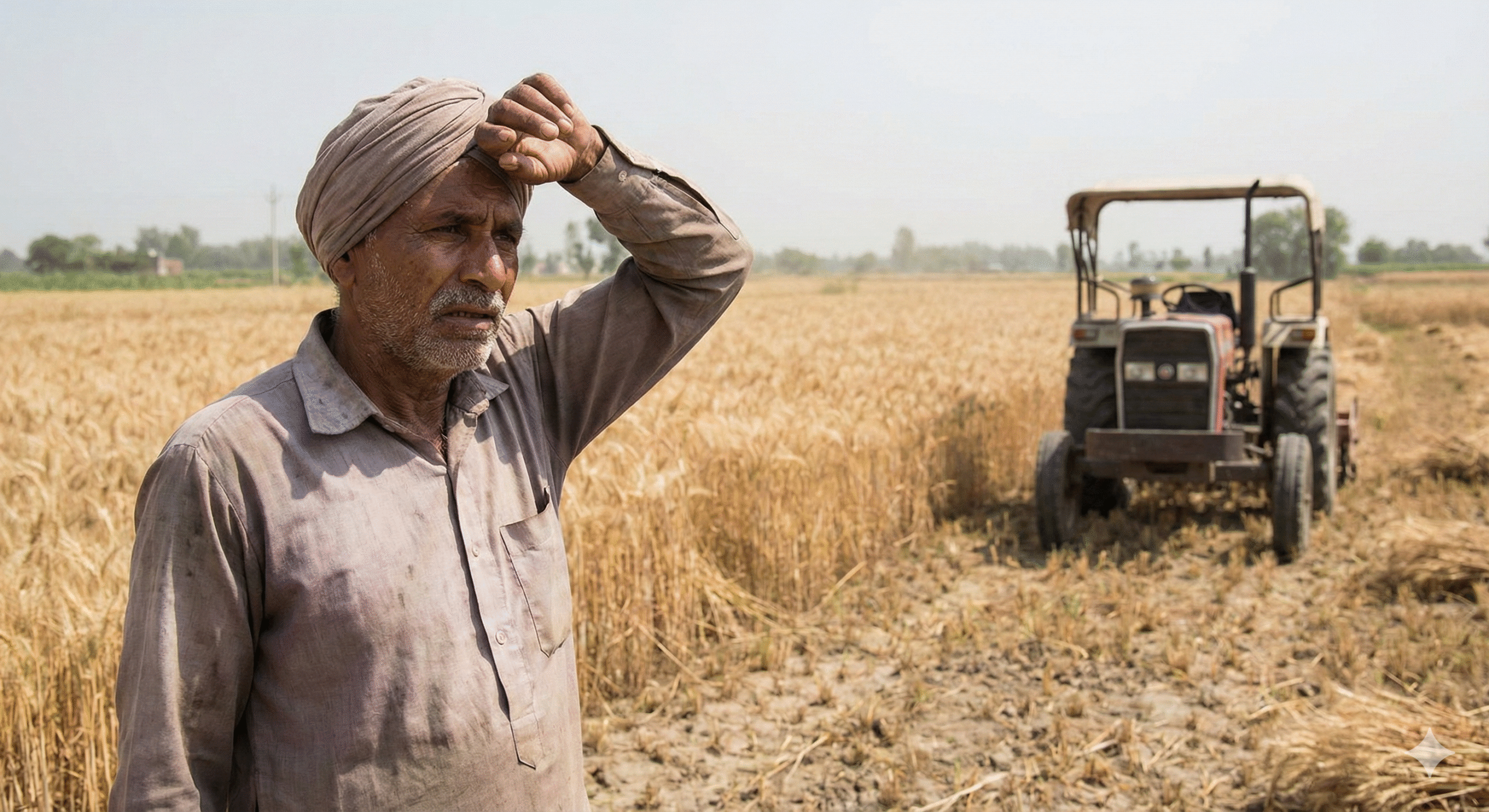
If you run a farm or work closely with farmers, you already know the uncomfortable truth. Finding reliable labour during peak operations is getting harder every season. Transplanting, weeding, spraying, harvesting, even simple field prep often becomes a race against time. When labour is short, the work gets delayed. When work gets delayed, yields and quality take the hit. That is exactly why farm automation is no longer a future topic. It is a present day survival tool.
India is not starting from zero, but the gap is real. The Department of Agriculture and Farmers Welfare notes that Indias mechanization level is still around forty to forty five percent, far below countries where it is above ninety percent. PRS has also summarized that a large share of activities are mechanised, but still not complete, and the structure of Indian farming matters because most holdings are small and marginal.
Farm automation, when done thoughtfully, can reduce dependence on scarce labour, cut delays, improve precision, and make farming more predictable. It also opens the door to autonomous farming and agricultural robots in a way that works for Indian field realities.
In this guide, we are going to dive deep into how autonomous farming is reshaping agriculture, why it is necessary, and how it can actually be profitable for the Indian farmer.
Why Is the Indian Farmer Facing a Labor Crisis?
Before we talk about robots, we need to understand the gap they are filling. Agriculture has always been the backbone of the Indian economy, employing nearly half the workforce. However, the ground reality is shifting rapidly.
According to recent industry reports, the percentage of the workforce engaged in agriculture is steadily declining. Why?
- Urban Migration: Better wages and living standards in cities are pulling youth away from villages.
- Aspirational Shifts: The younger generation of farming families often prefers non-farming professions.
- Seasonality: Farm labor is seasonal, meaning workers often find year-round employment in construction or manufacturing more secure.
This scarcity drives up the cost of labor significantly during peak seasons like sowing and harvesting. For a farmer operating on thin margins, paying double or triple the daily wage just to get the crop off the ground is unsustainable. This economic pressure is the catalyst driving the urgent adoption of farm automation.
What Exactly Is Farm Automation?
When we say “farm automation,” we aren’t necessarily talking about a humanoid robot walking through the fields. In the context of smart farming, automation refers to technology that makes farming operations more efficient and less dependent on manual intervention.
It creates a system where agricultural robots and machinery perform repetitive, labor-intensive tasks with higher precision than a human ever could.
Think of it this way: instead of hiring ten people to spray pesticides manually, risking their health and wasting chemicals due to uneven spraying, you use a single drone or an automated sprayer that covers the same area in a fraction of the time, using less liquid. That is the power of automation.
How Are Autonomous Tractors and Robots Changing Indian Farming
Let’s look at the specific technologies that are acting as the new workforce for Indian agriculture.
Autonomous Tractors
The tractor is the heart of Indian farming. Now, imagine it driving itself. Autonomous farming has taken a giant leap with driverless tractors. These machines are equipped with GPS, sensors, and AI that allow them to plow, sow, and harvest without a human in the driver’s seat.
While fully driverless tractors are still in the premium segment, “assisted” autonomy is becoming common. These tractors can steer themselves in straight lines with centimeter-level accuracy, preventing overlap and saving fuel. For a farmer, this means the tractor can run 24/7 during the short sowing window, something a human driver simply cannot do.
Weeding and Harvesting Robots
Weeding is back-breaking work. It is arguably the most labor-intensive task in farming. Agricultural robots designed for weeding use computer vision (cameras) to identify weeds and remove them mechanically or spray a micro-dose of herbicide exactly on the weed, leaving the crop untouched.
This is a massive win for precision agriculture. It reduces chemical usage, saves the soil, and eliminates the need for manual weeding crews that are hard to find.
Kisan Drones
You cannot talk about Indian agritech without mentioning drones. Supported by government subsidies under the “Kisan Drone” scheme, these aerial robots are becoming a common sight. They are used for:
- Spraying: Drones can spray an acre of land in under 10 minutes.
- Crop Monitoring: They provide aerial data on crop health, irrigation needs, and pest attacks before they become visible to the human eye.
To learn how AI drones and robotics are improving precision farming in India, read this detailed guide.
How Farm Automation Solves the Labor Problem
The shift to farm automation isn’t just about replacing people; it is about augmenting the farmer’s capability. Here is how it directly addresses the crisis:
Reliability Over Availability
Robots don’t take sick days, they don’t migrate to the city during harvest, and they don’t demand higher wages when the rain starts falling. Autonomous farming offers predictability. A farmer knows exactly how long a task will take and can plan the entire season without worrying about labor shortages.
Precision and Cost Reduction
Human labor varies in quality. One worker might sow seeds too deep; another might spray too much pesticide. Agricultural robots operate with standard consistency.
- Reduced Input Costs: By using precision agriculture techniques, automation ensures that fertilizers and water are applied only where needed. This can reduce input costs by significantly.
- Higher Yields: Timely harvesting and sowing crucial in rain-fed agriculture – boost production significantly.
Safety and Dignity
Farming involves hazardous tasks. Spraying toxic chemicals or working under the scorching sun for hours poses health risks. Automation takes over these dangerous jobs, allowing the human workforce to focus on supervision, machine management, and decision-making. It elevates the role of the farm worker from a manual laborer to a machine operator.
What Challenges Are Slowing the Adoption of Farm Automation in India
We must be realistic. If farm automation is so great, why isn’t every farmer using it? There are genuine hurdles we need to acknowledge.
- High Initial Cost: An autonomous tractor or a weeding robot is expensive. For a smallholder farmer owning less than two acres (which is the majority in India), buying this equipment outright is impossible.
- Fragmented Land: Indian farms are often small and irregular in shape, unlike the massive rectangular fields in the USA. Robots need to be programmed to navigate these complex boundaries.
- Technical Literacy: Operating a drone or a programmed robot requires a new set of skills.
This is how farm automation becomes a practical answer to the labour crisis rather than a distant promise.
How Does Farming as a Service Solve Automation Challenges for Indian Farmers
This is where the game changes for the small Indian farmer. Let’s face it: buying an autonomous tractor or a high-end agricultural robot is financially impossible for a farmer owning just two acres. This is where Farming as a Service (FaaS) steps in to bridge the gap. Farming as a Service is a model where farmers access modern machinery technology and skilled operators on a rental basis instead of owning the equipment.
Think of FaaS as the “Uber for tractors.” Instead of investing lakhs in purchasing machinery, farmers can simply rent advanced automation tools on a pay-per-use basis. Agri-tech startups and Custom Hiring Centers (CHCs) are now offering drones, automated transplanters, and harvesters for hourly rates that fit a modest budget.
This model eliminates the burden of maintenance and ownership costs. It democratizes farm automation, ensuring that even smallholder farmers can access smart farming technologies previously reserved for wealthy corporate farms. It is the most practical way to bring high-tech efficiency to India’s fragmented landholdings without breaking the bank.
The Road Ahead
The future of Indian agriculture is undoubtedly digital. With the government pushing for digital public infrastructure in agriculture and the rise of deep-tech startups, the barrier to entry is lowering every year.
We are moving toward a future where a farmer in a remote village can monitor his autonomous tractor from a smartphone while dealing with traders online. It transforms agriculture from a subsistence activity into a precise, profitable business. Global innovators like Invade Agro Global are pivotal to this shift, actively bridging the gap between traditional practices and modern technology to ensure Indian farmers are future-ready.