For generations, farming was a profession of intuition. A farmer would walk his rows, crumble a handful of soil between his fingers, and look at the sky to decide when to plant or harvest. While that “gut feeling” is a testament to human resilience, the modern world demands more than just a good guess. With a global population climbing toward 10 billion and a climate that refuses to stay predictable, the margin for error has vanished.
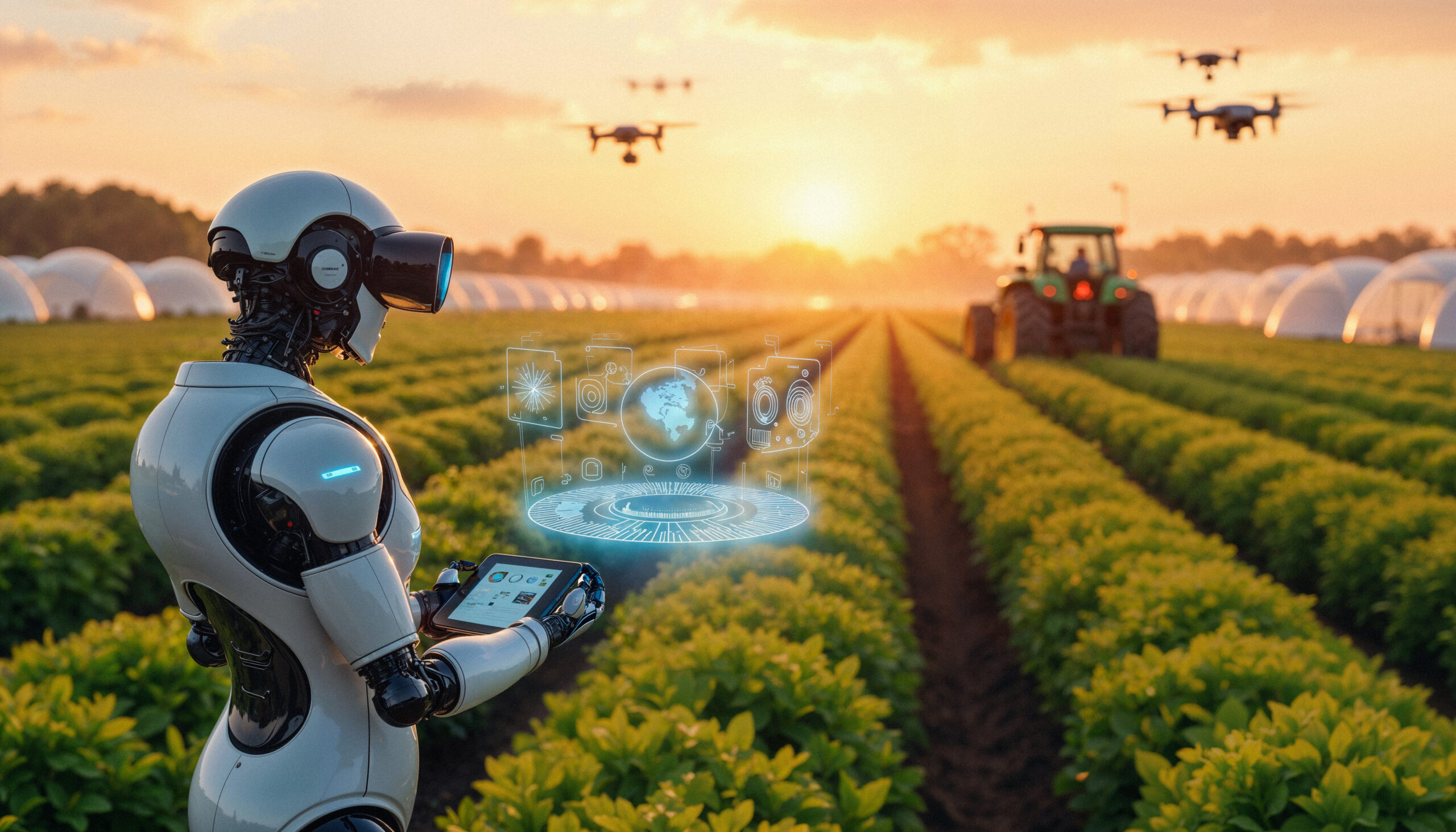
This is where AI in farming enters the frame. We are currently witnessing a digital revolution where the “eye of the master” is being augmented by the precision of a sensor. By shifting from subjective observation to objective data, crop monitoring technology is ensuring that every seed has the best possible chance to thrive.
What is the Role of AI in Farming?
At its core, AI in farming acts as a bridge between massive amounts of raw data and actionable decisions. Think of it as a 24/7 consultant that never sleeps, analyzing everything from satellite imagery to soil pH levels. Instead of treating an entire 1,000-acre field as a single unit, AI allows farmers to see the nuances of every square meter.
The role of AI in farming isn’t to replace the farmer; it’s to provide them with “superpowers.” Through machine learning algorithms, computers can now identify patterns in crop stress that are invisible to the human eye. For instance, a neural network can detect the early thermal signature of water stress days before a leaf actually begins to wilt. This shift from reactive to proactive management is what defines the modern era of precision agriculture.
How Does Crop Monitoring Technology Improve Yields?
The secret to a record-breaking harvest isn’t just “more” fertilizer or “more” water; it is the right amount, at the right place, at the right time. This is the primary value proposition of crop monitoring technology. By using a combination of IoT sensors, satellite data, and aerial drones, farmers can now move away from “blanket applications” and manage their fields with surgical precision.
High-Resolution Vegetative Assessment
Modern crop monitoring technology utilizes multispectral imaging to calculate the Normalized Difference Vegetation Index (NDVI). Rather than a simple visual check, this data quantifies the “vigor” of a plant by measuring how it reflects near-infrared light. This tells a farmer exactly how much chlorophyll is present and where photosynthesis is lagging.
According to research, the use of remote sensing in precision agriculture can increase nitrogen use efficiency by up to 30%. This directly impacts the bottom line by ensuring that expensive inputs are only used where the plant can actually absorb them, simultaneously reducing hazardous environmental runoff.
Targeted Input Management (VRT)
When you integrate AI in farming with GPS-guided machinery, you unlock Variable Rate Technology (VRT). In the old “guesswork” model, a sprayer would apply a uniform layer of pesticide or herbicide across an entire 500-acre plot. In the data-driven model, the machinery “talks” to the crop monitoring technology in real-time.
As the tractor moves, the AI-enabled system opens and closes nozzles based on the specific needs of that square meter. If a patch of the field is healthy and pest-free, the system applies nothing. If a patch is under attack, it delivers the precise dosage required. This targeted approach of precision agriculture saves thousands of dollars in chemical costs, protects soil microbiology, and ensures that the final harvest is as clean and natural as possible.
How Does Computer Vision Eliminate Field Guesswork?
In the past, identifying a nutrient deficiency or a leaf blight required a “boots-on-the-ground” approach. A farmer had to be in the right place at the right time to spot the problem. AI in farming has fundamentally changed this through a technology called Computer Vision. By training algorithms on millions of images of healthy and diseased crops, crop monitoring technology can now “see” issues with more consistency than any human could.
Instead of guessing if a yellowing leaf is caused by nitrogen deficiency or a specific fungus, precision agriculture platforms analyze the exact spectral signature of the plant. This data-driven approach allows for:
- Automated Scouting: Drones equipped with AI can scan hundreds of acres in minutes, flagging “zones of interest” that require attention.
- Early Warning Systems: AI can detect subtle changes in leaf texture or color that signify stress long before they are visible to the naked eye.
- Accurate Yield Estimation: By counting individual fruits or grains across an entire field using crop monitoring technology, farmers can predict their harvest volume with incredible accuracy weeks in advance.
By removing the subjectivity of human sight, AI in farming ensures that every decision, from irrigation to harvesting is based on the literal reality of the field, not just an educated guess.
Can AI in Farming Predict Pest Outbreaks?
One of the most frustrating parts of traditional farming is discovering a pest infestation when it’s already too late. By then, the damage is done, and the only solution is heavy chemical intervention. However, AI in farming is turning the tide through predictive analytics.
By feeding historical weather data, humidity levels, and satellite imagery into AI models, systems can now predict the likelihood of a pest outbreak or a fungal infection before it happens. This allows for “preventative strikes.”
Crop monitoring technology can identify the specific environmental “fingerprint” that leads to a locust swarm or a potato blight. When the AI sees these conditions aligning, it sends an alert to the farmer’s smartphone. This level of foresight is changing the industry from a game of chance into a disciplined science.
Which Crop Monitoring Technology Is Best for Small Farms?
There is a common misconception that precision agriculture is only for massive industrial operations with multi-million dollar budgets. Fortunately, the democratization of technology has made AI in farming accessible to small and medium-sized enterprises (SMEs) as well.
The “best” technology is usually a tiered approach:
- Satellite-Based Monitoring: Services that provide low-resolution but frequent updates on field health are often the most cost-effective starting point.
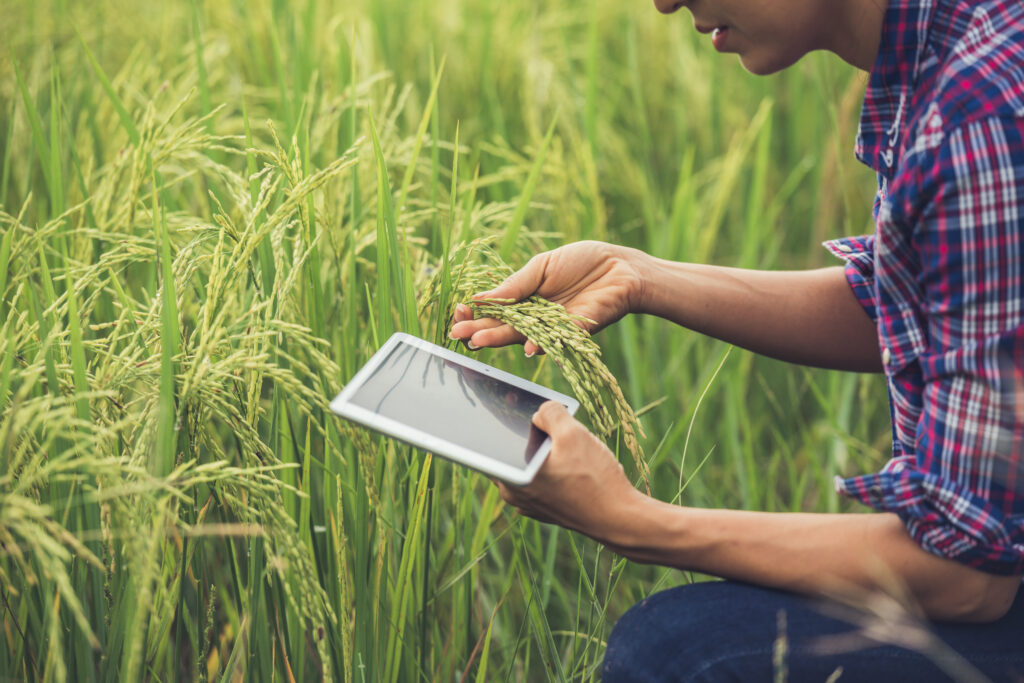
- Smartphone-Based Diagnostics: AI apps that allow a farmer to take a photo of a leaf and receive an instant diagnosis of a disease are revolutionizing small-scale crop monitoring technology.
- Soil Sensors: Affordable, plug-and-play IoT sensors that monitor moisture and salinity are essential for anyone looking to optimize irrigation.
By starting with these scalable solutions, smaller farms can see an immediate ROI, which can then be reinvested into more advanced AI in farming tools.
How Does AI in Farming Support Sustainability?
The environmental footprint of agriculture is a major global concern. From methane emissions to nitrogen leaching into waterways, the old ways of farming are often at odds with the planet. Precision agriculture offers a way to align profitability with planet-wide health.
When we use AI in farming to apply water and chemicals only where needed, we significantly reduce waste. Furthermore, crop monitoring technology can assist in carbon sequestration efforts. By monitoring soil health and organic matter levels via AI, farmers can participate in carbon credit markets, creating a new revenue stream while actively fighting climate change.
According to Agriculture World, the integration of AI in farming is a key pillar in the “Green Revolution 2.0,” where data is the most valuable seed we can plant.
What Is the Future of AI in Farming?
We are just scratching the surface. The future of AI in farming involves fully autonomous ecosystems. Imagine a fleet of small, solar-powered robots that live in the field, using crop monitoring technology to identify weeds and pull them mechanically rather than using chemicals.
We are also seeing the rise of “Digital Twins” in precision agriculture. This is where a virtual replica of a farm is created in a computer. Farmers can “test” different scenarios, like a simulated drought or a change in fertilizer brand to see the results before they ever spend a dime in the real world.
As AI in farming continues to evolve, the line between technology and biology will blur, leading to a more resilient, transparent, and efficient food system.
Overall…
The transition from guesswork to data isn’t just a trend; it’s a fundamental shift in how we interact with the earth. By embracing AI in farming and sophisticated crop monitoring technology, we are ensuring that agriculture can meet the demands of the 21st century without depleting our natural resources. This digital transformation empowers growers to make decisions with confidence, backed by hard evidence rather than historical assumptions.
Whether you are a commercial grower or an ag-tech enthusiast, the goal remains the same: to produce more with less. Through precision agriculture, we are finally achieving that balance of high productivity and environmental stewardship. The tools are here, the data is ready, and the future of the field has never looked brighter. If you are ready to modernize your operations and see the power of data firsthand, explore how the solutions at Invade Agro can help you turn these insights into a thriving harvest.