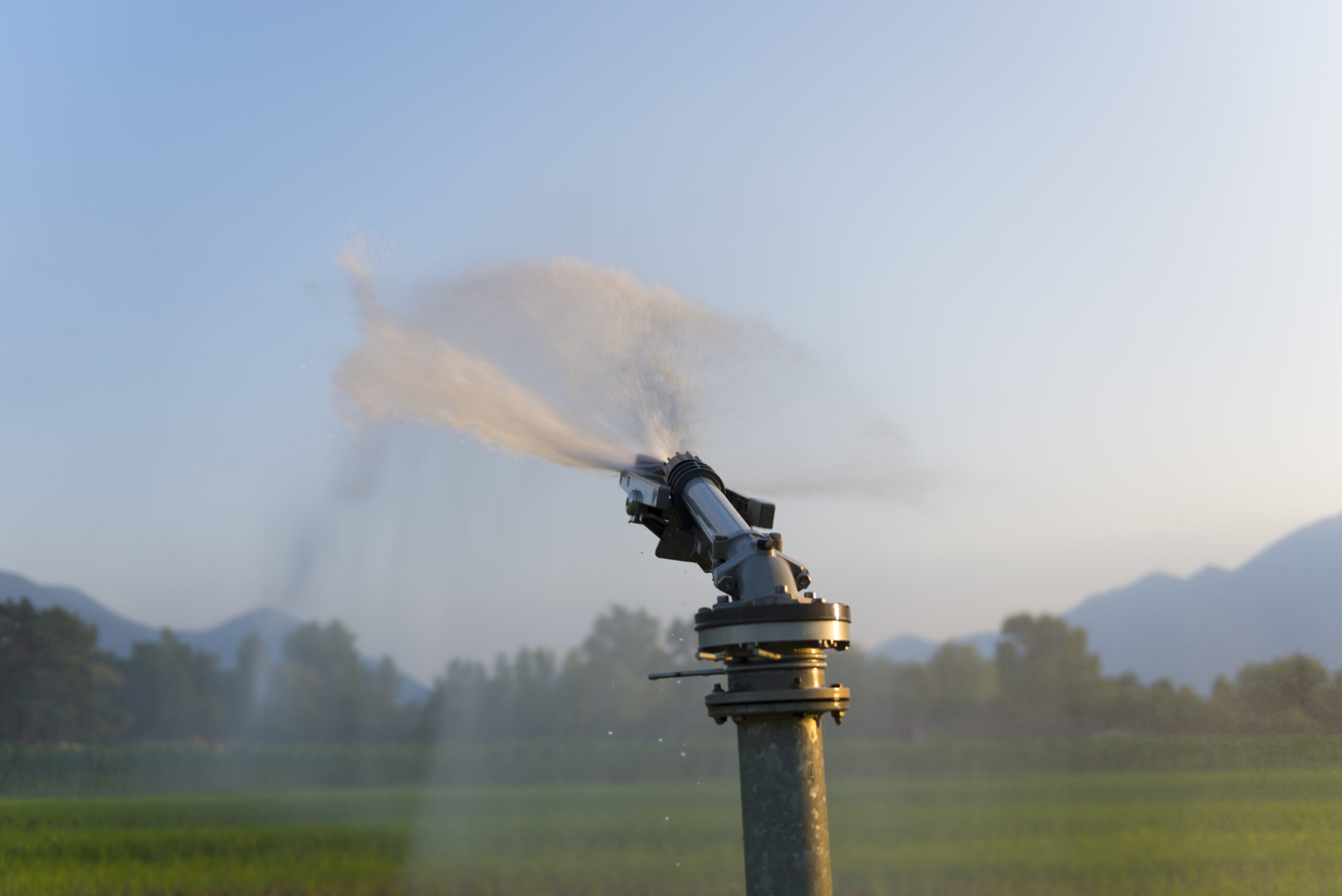
Agriculture is at a very defining epoch. Scarcity of water is a thing of the past; it is a reality for millions of farmers. UNESCO estimates that agriculture consumes almost 70 percent of the total amount of freshwater taken across the globe, but a large portion of it is wasted by means of inefficient irrigation, evaporation, and runoff. Farmers are being pressured to make the most out of every drop of water they consume as climate patterns become erratic and groundwater levels keep dropping.
This is whereby a smart irrigation system in agriculture is not only an added value, but also a need. The farms of today have to generate greater quantities of food with fewer natural resources, and the use of precision-guided irrigation is one of the most feasible options. Smart irrigation involves sensors, data analytics, and automated controls, which are integrated to ensure that something highly reliant on guesswork is provided with science, accuracy, and predictability.
Farmers are starting to think, act, and grow differently in a world where sustainability and productivity have to go hand in hand, and that is where smart irrigation is coming in.
What Exactly Is a Smart Irrigation System in Agriculture?
A smart irrigation system in agriculture is an intelligent and data-driven method that delivers just the right amount of water to crops – not more, not less. The smart irrigation system uses real-time data to optimize the flow of water as compared to the traditional irrigation systems. Such systems integrate:
- Soil moisture sensors
- Irrigation control by weather conditions.
- IoT-enabled valves and pumps
- Remote monitoring mobile dashboard.
- Water sensors to notify about water leakages, moisture, or system malfunctions.
A smart irrigation system in farmlands does not irrigate according to set schedules, but according to what the soil and the crop actually need at any given time. It is transformed into an active system – self-correcting, adapting, and most efficient.
The result? Greater productivity, reduced water stress, and an agricultural system to suit the requirements of the latest precision farming.
How Do Smart Irrigation Technologies Work Behind the Scenes?
The strength of a smart irrigation system in agriculture is its understanding of the field. Such intelligence comes from technology working quietly underneath the surface.
- To start with, the soil moisture sensors inform farmers about the precise quantity of water in the root zone. The system activates irrigation when the soil has started drying up. It automatically shuts off when it has sufficient moisture.
- Second, IoT-based controllers can enable farmers to remotely control pumps and various valves, whether at home, at the market, or while tracking the operations of hundreds of acres.
- Third, weather-conditioned automatics help to avoid wasteful watering. In case of rain, the irrigation will automatically go off, which minimizes wastage.
- Lastly, AI-based applications will be able to analyze the pattern of crop growth, the changes in temperature, and soil dynamics to advise the optimal irrigation schedule.
Combining these technologies, a smart irrigation system in agriculture is more precise, responsive, and cost-effective than any other old system.
Why Is Precision Farming with Drip Agriculture Becoming a Global Standard?
When it comes to irrigation techniques, although there are a number of methods that can be used, the world has opted to recommend precision farming with drip agriculture, which is used coupled with smart technology.
Drip lines direct the water to the root zone of the plant, eliminating evaporation and runoff. In the case of an irrigation system in agriculture that is smart and combines drip, the outcomes can be astounding:
- Water gets where it is required.
- Fertigation is possible through the application of nutrients.
- Moisture level in soil is maintained at the same level.
- The loss of water has been significant.
Drip agriculture has ensured that crops are planted in the same amount of water, resulting in healthier crops, growth with stronger roots, and higher yields. Small vegetable farms to big orchards deserve it. Drip agriculture has been demonstrated to be a sustainable foundation of contemporary irrigation.
What Are the Key Benefits of Using a Smart Irrigation System in Agriculture?
The farmers who use smart irrigation experience fast and quantifiable effects. The major benefits include:
Significant Water Savings
Flood irrigation uses up to 20-60% of water, which can be saved by using smart irrigation systems in agriculture. This is vital to drought-prone areas.
Improved Crop Health
Even soil moisture minimizes the chances of diseases such as rot, fungus, or leaching of nutrients.
Lower Labor and Energy Costs
Automation saves on the use of manual intervention, time of pump operation, and power consumption.
Real-Time Decision Making
Farmers can have 24/7 access to moisture, system performance, weather, and crop needs.
Scalability of any size farm.
One-acre vineyards to 1000-acre sugarcane fields- an smart irrigation system in agriculture is easily scaled.
The combination of these advantages allows farmers to enhance the quality of the produced yields and minimise wastage of resources.
How Does a Smart Irrigation System in Agriculture Support Sustainability and Climate Resilience?
Sustainability is not a fad, but it is a necessity. An smart irrigation system in agriculture facilitates ecological balance in the following ways:
- Lessens the extraction of groundwater.
- Eliminates soil erosion and runoff of nutrients.
- Reduces carbon footprint by effective use of pumps.
- Guarantees weather-adaptive irrigation based on weather predictions.
Overall, climate-smart irrigation technologies can save farmers worldwide against loss of yield to climate change. Smart irrigation is not a tool; it is an insurance against climatic uncertainty.
What Challenges Should Farmers Expect When Shifting to Smart Irrigation?
Despite the benefits, farmers should take into account:
- The sensors and controllers cost to start.
- Basic digital training is required.
- Periodical calibration of equipment.
- Leverage on power or network connectivity.
Nonetheless, they are mitigated by the fact that technology is becoming more affordable and more prevalent.
What Does the Future Hold for Automated Irrigation and Precision Farming?
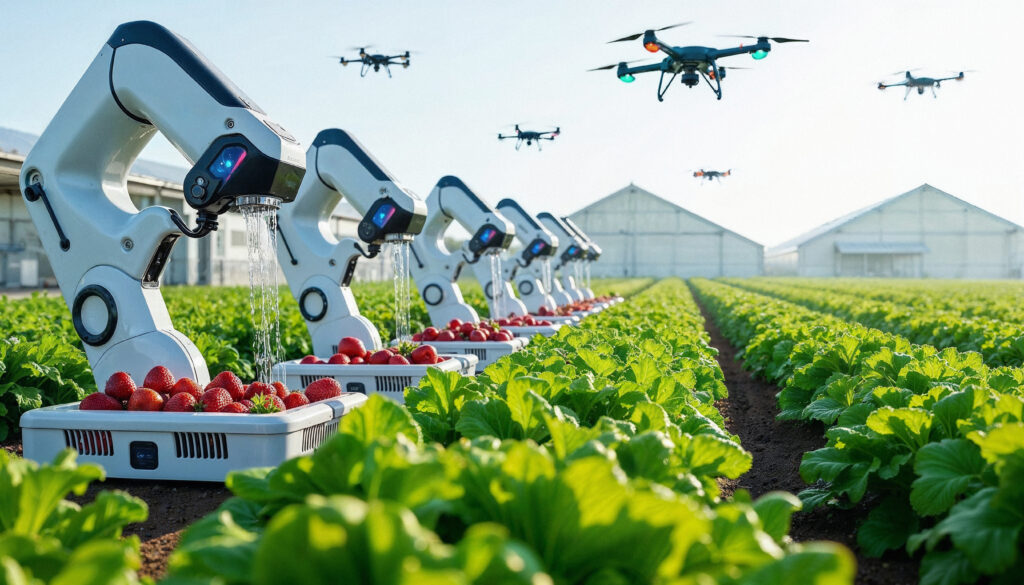
In the future, the world will be smart and automated:
- Nutrient dosing will be personalized by AI to customize the process of fertilization.
- The drones will scan variations in moisture in the fields.
- Many autonomous irrigation systems will become commonplace.
- The water planning for seasons will be optimized by predictive climate algorithms.
A smart irrigation system in agriculture will soon be integrated into a more extensive system of interconnected, autonomous farming implements.
Why Is This the Right Time to Adopt a Smart Irrigation System in Agriculture?
The globe is advancing towards the use of environmentally friendly, technology-driven agriculture, and the early adoptive farmers will be the ones to change the course of this revolution. The implementation of a smart irrigation system in agriculture results in the perfect allocation of water, healthier plants, reduced costs, and soil that can bear the impact of harsh weather for a longer period of time.
At Invade Agro Global, we are actively advocating for precision farming technology that enables the farmer to switch to an efficient, sustainable system. The combination of precision farming with drip irrigation and smart irrigation becomes a highly effective, future-oriented method that not only increases the yield but also saves resources and improves climate resilience.
Smart irrigation is not only the future of farming, but it is already in practice, and it is the “very” road to a resilient agricultural future.