How can a country smaller than the Indian state of Haryana feed hundreds of millions across the world?
The Netherlands covers an area of around 41,850 square kilometers – small in size but mighty in impact. Despite its compact geography, it’s the world’s second-largest exporter of agricultural products, just after the United States. This transformation did not come from size or soil richness, it came from innovation, data, and a relentless commitment to sustainability.
In the past two decades, sustainable farming in Netherlands has redefined what agriculture can achieve with technology and discipline. According to one report, farmers here use up to 90% less water for crops grown in advanced greenhouses compared to traditional open-field systems (Source: Wageningen University). This approach is rooted in efficiency, precision, and environmental stewardship which is shaping the global narrative of modern agriculture.
What makes sustainable farming in Netherlands unique?
At its heart, sustainable farming in Netherlands thrives on one principle: “produce more with less.”
The Dutch model is built on three foundations – innovation, circular economy, and collaboration. Instead of expanding farmland, the Netherlands has focused on optimizing each square meter through smart greenhouses, hydroponics, and data-driven farming systems.
A significant share of Dutch agricultural exports now comes from horticulture, grown in temperature-controlled greenhouses that recycle both water and nutrients. Farmers integrate IoT sensors, AI monitoring, and drip irrigation systems to track plant health and soil moisture in real time. The result is a system that boosts productivity while protecting the environment.
What sets the Netherlands apart is not just technology, but mindset. Every innovation is designed to close loops: waste from one process becomes input for another. It’s not merely sustainability – it’s circular thinking in action.
How does technology drive Dutch agriculture?
Technology is the backbone of sustainable farming in Netherlands. From drone surveillance to AI-driven crop analytics, the Dutch farm smarter, not harder.
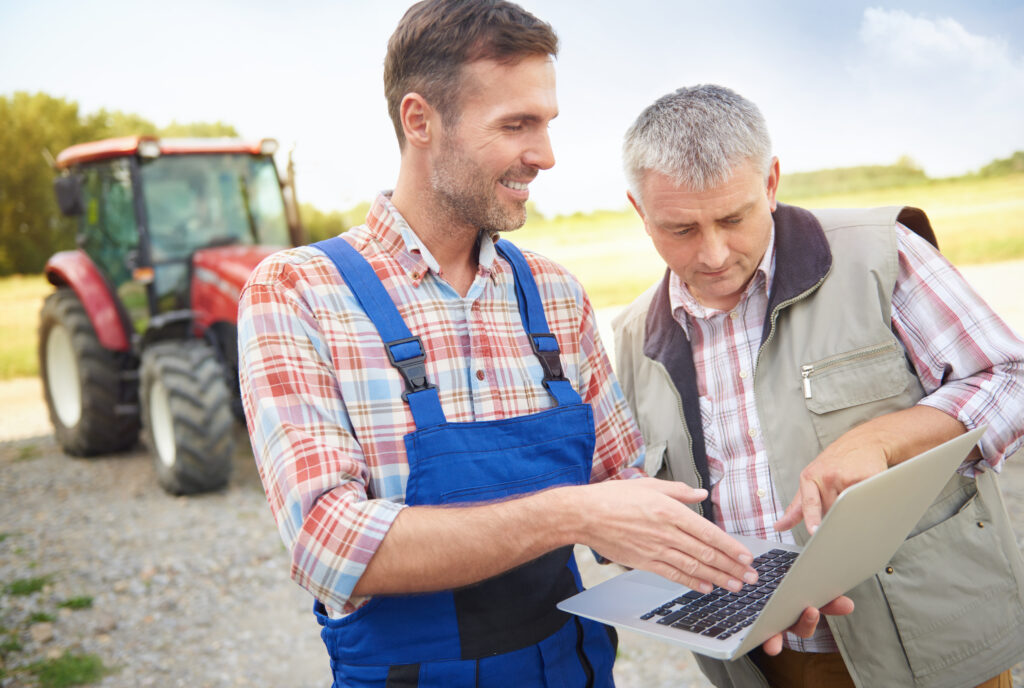
In the famous Westland region, greenhouses equipped with intelligent climate systems regulate temperature, light, and humidity automatically, allowing crops to flourish year-round. LED-lit vertical farms in Amsterdam produce leafy vegetables with minimal land and zero pesticide use. Drones and autonomous tractors monitor nitrogen levels, capture multispectral imagery, and detect diseases before they spread.
These technologies don’t replace farmers; they empower them. By combining artificial intelligence with local expertise, Dutch growers make farming a science – predictable, measurable, and regenerative.
How does regenerative agriculture in Netherlands restore nature?
While sustainability focuses on minimizing harm, regenerative agriculture in Netherlands aims to reverse damage which includes healing soil, water, and biodiversity.
Dutch farmers are embracing cover cropping, crop rotation, compost-based fertilization, and reduced tillage to rebuild organic matter and restore carbon balance. Regenerative systems here are designed to improve soil fertility while trapping carbon dioxide, directly supporting the EU’s 2050 Climate Neutrality Goal.
As per the report by Deloitte, the Dutch government is taking this transformation seriously, it recently announced an investment of €129 million in “Re-Ge-NL,” a national program dedicated to advancing research, innovation, and regenerative practices. This initiative strengthens the scientific backbone of regenerative agriculture in Netherlands, ensuring that restoration becomes measurable, scalable, and globally replicable.
For instance, dairy farms in Friesland are integrating carbon-neutral manure management systems and bio-digesters that convert waste into renewable energy. This shift exemplifies how regenerative agriculture in Netherlands transforms farms into self-sustaining ecosystems.
Even major Dutch retailers now partner with regenerative producers to ensure their supply chains contribute to net-positive outcomes. It’s not just about protecting nature but it’s about rebuilding it.
And in this, the Netherlands is showing that true sustainability is not static, it evolves, regenerates, and gives back more than it takes.
How do policies and partnerships support Dutch farming?
The success of sustainable farming in Netherlands is not a coincidence. It is the result of clear vision, progressive policies, and strong collaboration across sectors. The Dutch government’s Circular Agriculture 2030 Vision sets an ambitious goal to transform agriculture from a linear system of growth, use, and waste into a circular one focused on reuse, recovery, and regeneration.
This framework encourages farmers to adopt resource-efficient practices and integrate technology that reduces environmental impact. At the same time, public and private partnerships unite farmers, agri-tech innovators, researchers, and policymakers to develop and scale practical solutions. These collaborations have turned the Netherlands into a real-world testing ground for sustainable farming practices.
By aligning science, business, and policy, the Netherlands has created an agricultural ecosystem built on innovation and shared responsibility. Every participant, from greenhouse designers to smallholder farmers, contributes to the nation’s vision of food security and climate resilience.
What can other nations learn from the Dutch model?
Every region faces its own agricultural challenges, but the Dutch blueprint offers universal lessons.
Efficiency is more powerful than expansion.
The Netherlands proves that limited land doesn’t limit potential. With precision tools and regenerative systems, nations can achieve food security without deforestation or resource depletion.
Data is the new fertilizer.
Smart farming systems in the Netherlands rely on continuous feedback such as sensors, drones, and satellite imagery that guide farmers’ every move.
Partnerships create resilience.
Collaboration between government, private sector, and farmers ensures long-term sustainability.
Invade Agro Global shares this philosophy which scaling innovation responsibly across India and Africa. Through research, education, and partnerships, Invade champions models where every acre produces more yield, less waste, and greater ecological balance – just as sustainable farming in Netherlands has done.
Why does the future depend on sustainable and regenerative farming?
Climate change, population growth, and resource scarcity are rewriting the rules of agriculture. The path forward is not more chemicals or larger farms but smarter systems rooted in sustainability.
The story of sustainable farming in Netherlands is more than national pride, it’s a global prototype for resilience. And the rise of regenerative agriculture in Netherlands shows that when innovation meets empathy for the planet, farming becomes not just productive, but restorative.
As the world seeks food security amid changing climates, one thing is clear: the future of farming will be defined not by the size of our land, but by the intelligence of our practices. And the Netherlands, once known for tulips and windmills, is now cultivating something far greater – a roadmap for humanity’s sustainable future.
Key Takeaways
- Sustainable farming in Netherlands proves that small nations can lead large revolutions.
- The Re-Ge-NL investment reflects the country’s deep commitment to regenerative progress.
- Technology, data, and policy alignment create measurable impact.
- Regenerative agriculture in Netherlands transforms sustainability from preservation to renewal.
- Collaboration between farmers, innovators, and governments is the real engine of progress.