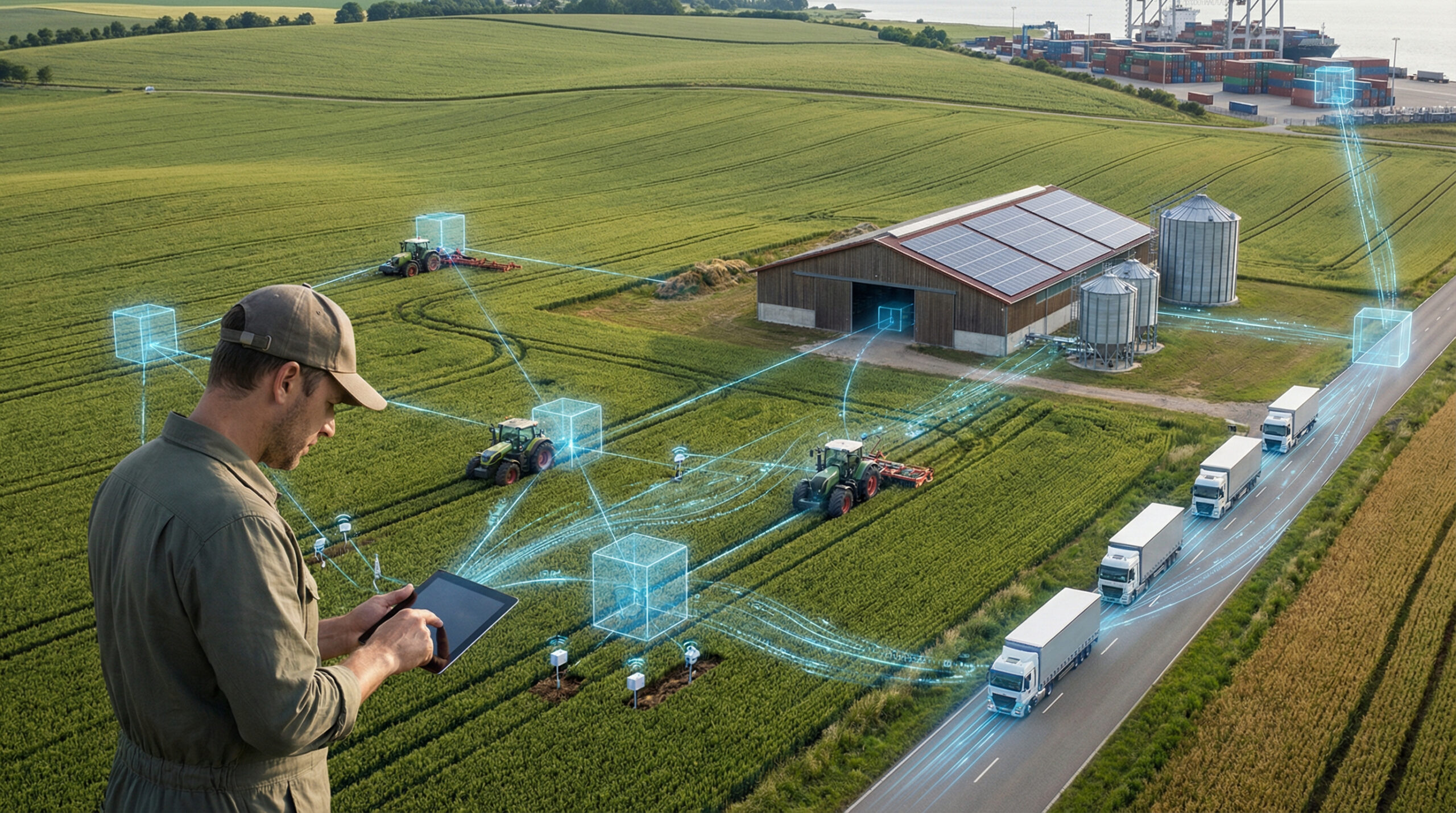
If you pause for a moment and think about the journey of your food, you’ll notice a strange gap. You know what you are eating, but you rarely know where it truly came from, how it was grown, or how many hands touched it before it reached you. That lack of visibility isn’t just a consumer problem. It affects farmers, exporters, regulators, and entire agricultural economies.
Agriculture today produces more data than ever before – soil readings, weather patterns, crop health metrics, logistics updates, yet much of this data remains fragmented, delayed, or unverifiable. This is where two technologies are quietly stepping in to reshape farming from the ground up: 5G connectivity and blockchain.
Together, they are not just making agriculture smarter. They are making it transparent, accountable, and future-ready.
Why Does Agriculture Need a New Digital Foundation
Agriculture operates across long, complex supply chains. A single crop may pass through farmers, aggregators, storage facilities, processors, transporters, exporters, and retailers before reaching the end buyer. Each step introduces delays, manual records, and opportunities for error or manipulation.
According to the FAO, food supply chains lose up to one-third of all food produced globally due to inefficiencies, poor monitoring, and lack of traceability. For farmers, this opacity often translates into price uncertainty and delayed payments. For buyers and consumers, it creates quality and safety concerns.
What agriculture lacks today is not effort or intent. It lacks a trusted digital backbone that connects every stage of production in real time.
What Is Blockchain in Agriculture
Blockchain, in simple terms, is a shared digital ledger where records cannot be altered once they are written. Unlike traditional databases that are controlled by a single authority, blockchain distributes data across multiple participants, making it transparent and tamper-resistant.
In agriculture, this means that crop details such as origin, input usage, harvest dates, quality certifications, and storage conditions can be permanently recorded. Once entered, this information cannot be quietly changed or erased.
The Food and Agriculture Organization of the United Nations highlights blockchain as a key enabler for improving traceability, reducing fraud, and building trust in agri-food systems. Instead of relying on paper trails or disconnected spreadsheets, stakeholders gain a single source of verified truth.
How Does Blockchain Enable Farm Transparency
Transparency begins at the farm level. Blockchain allows data to be recorded directly from the source, often the farmer or automated farm systems, and then shared across the supply chain.
Each batch of produce can carry a digital identity. This identity includes where it was grown, what inputs were used, how it was handled, and whether it meets regulatory or sustainability standards. Because the data is immutable, buyers and regulators can trust what they see.
For farmers, this transparency is powerful. It protects them from disputes, strengthens their negotiating position, and opens doors to premium and export markets that demand traceability. For consumers, it restores confidence in food quality and safety.
What Role Does 5G Play in Smart Farming
While blockchain secures data, it still relies on how fast and how accurately data is collected. This is where 5G becomes critical.
5G networks offer ultra-low latency and significantly higher data speeds compared to existing mobile networks. In agriculture, this enables real-time connectivity between sensors, drones, farm machinery, and monitoring systems.
According to research, 5G can support up to one million connected devices per square kilometer, making it ideal for large-scale smart farming operations. From soil moisture sensors to cold storage monitoring, data can flow instantly without delays.
Without fast connectivity, blockchain records risk becoming outdated snapshots. With 5G, they become live, trustworthy reflections of reality.
Why Are 5G and Blockchain Stronger Together in Agriculture
Individually, both technologies offer value. Together, they create something far more impactful.
5G ensures that data is captured and transmitted instantly from the field. Blockchain ensures that once this data is recorded, it remains secure and verifiable. This combination eliminates manual data entry, reduces human error, and prevents manipulation.
For example, a temperature sensor in a grain warehouse can automatically update storage conditions on a blockchain ledger in real time. Any deviation is immediately visible to all stakeholders. This level of automation and trust was simply not possible before.
How Are 5G and Blockchain Transforming Smart Farming Use Cases
Across the agricultural ecosystem, real-world use cases are already emerging.
Crop traceability is becoming seamless, with exporters able to demonstrate compliance instantly. Input verification helps ensure that sustainable and organic practices are genuinely followed. Logistics monitoring improves shelf life by tracking storage and transit conditions continuously.
A study suggests that digital agriculture technologies could increase farm productivity when applied at scale. The real impact lies not just in efficiency, but in trust and accountability.
How Do Farmers Benefit From 5G and Blockchain Adoption
For farmers, 5G and blockchain are not about adding complexity to farming. They are about bringing clarity, control, and confidence into everyday decisions.
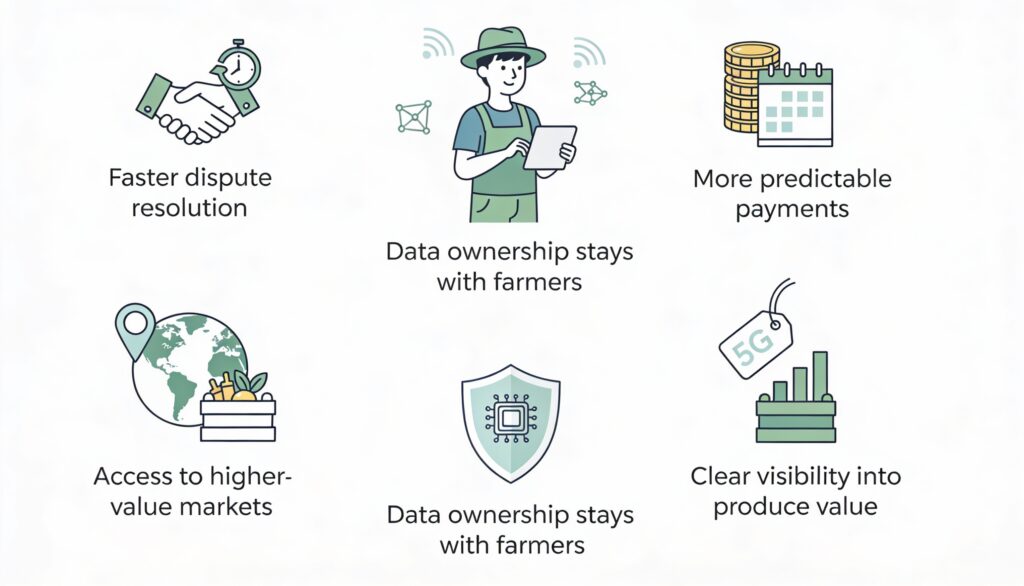
- Faster dispute resolution: Transparent and tamper-proof records reduce conflicts over quality, quantity, and delivery, saving time and financial stress.
- More predictable payments: Verified data across the supply chain supports quicker settlements and reduces delays caused by manual verification.
- Access to higher-value markets: Traceable and verified produce meets the standards of premium, export, and sustainability-focused buyers.
- Data ownership stays with farmers: Farm data remains under the farmer’s control instead of being locked into closed or opaque platforms.
- Clear visibility into produce value: Farmers can see how their crops move and gain value across the supply chain, improving negotiation power.
Ultimately, these technologies help shift agriculture away from a price-taker mindset toward a value-driven ecosystem where farmers are informed, empowered, and fairly rewarded.
What Challenges Must Be Overcome for Adoption
While the potential of 5G and blockchain in agriculture is significant, real-world adoption comes with practical challenges that must be addressed thoughtfully.
- Uneven rural connectivity: Many farming regions still lack reliable network infrastructure, limiting real-time data transmission.
- High initial implementation costs: Hardware, sensors, and digital systems require upfront investment that can slow adoption.
- Digital literacy gaps: Farmers and on-ground stakeholders may need training to confidently use new technologies.
- Interoperability issues: Different platforms and systems do not always communicate seamlessly, creating data silos.
These challenges are not permanent barriers. With targeted infrastructure development, farmer-focused training programs, and the adoption of open standards, the path to scalable and sustainable adoption becomes clearer. Addressing limitations openly builds trust and ensures long-term success across the agricultural ecosystem.
How Can Policy and Ecosystem Collaboration Accelerate Adoption
Technology alone cannot transform agriculture. Supportive policy and strong collaboration across the ecosystem are equally important. Governments play a crucial role by investing in rural digital infrastructure, setting clear and consistent traceability standards, and offering incentives that encourage farmers to adopt new systems without added financial stress.
At the same time, meaningful collaboration between farmers, technology providers, processors, exporters, and buyers ensures that digital solutions work across the entire value chain rather than remaining isolated pilots.
When data flows seamlessly between stakeholders and responsibilities are clearly defined, trust increases and adoption accelerates. Well-aligned ecosystems allow 5G and blockchain solutions to scale efficiently, delivering measurable impact, long-term resilience, and shared value across the agricultural landscape.
What Does the Future of 5G and Blockchain in Agriculture Look Like
Looking ahead, agriculture is moving toward a future where decisions are increasingly proactive rather than reactive. Real-time data, secure digital records, and predictive analytics will play a central role in reducing risk and building resilience across farming systems.
As artificial intelligence integrates with 5G and blockchain, these systems will go beyond documenting past activity to anticipating outcomes and guiding better decisions on the ground. Transparency will no longer serve as a competitive advantage; it will become a baseline expectation across modern agricultural ecosystems.
At Invade Agro Global, this shift reflects a broader responsibility to help build systems that prioritise data integrity, traceability, and long-term value for farmers and supply chain stakeholders alike.