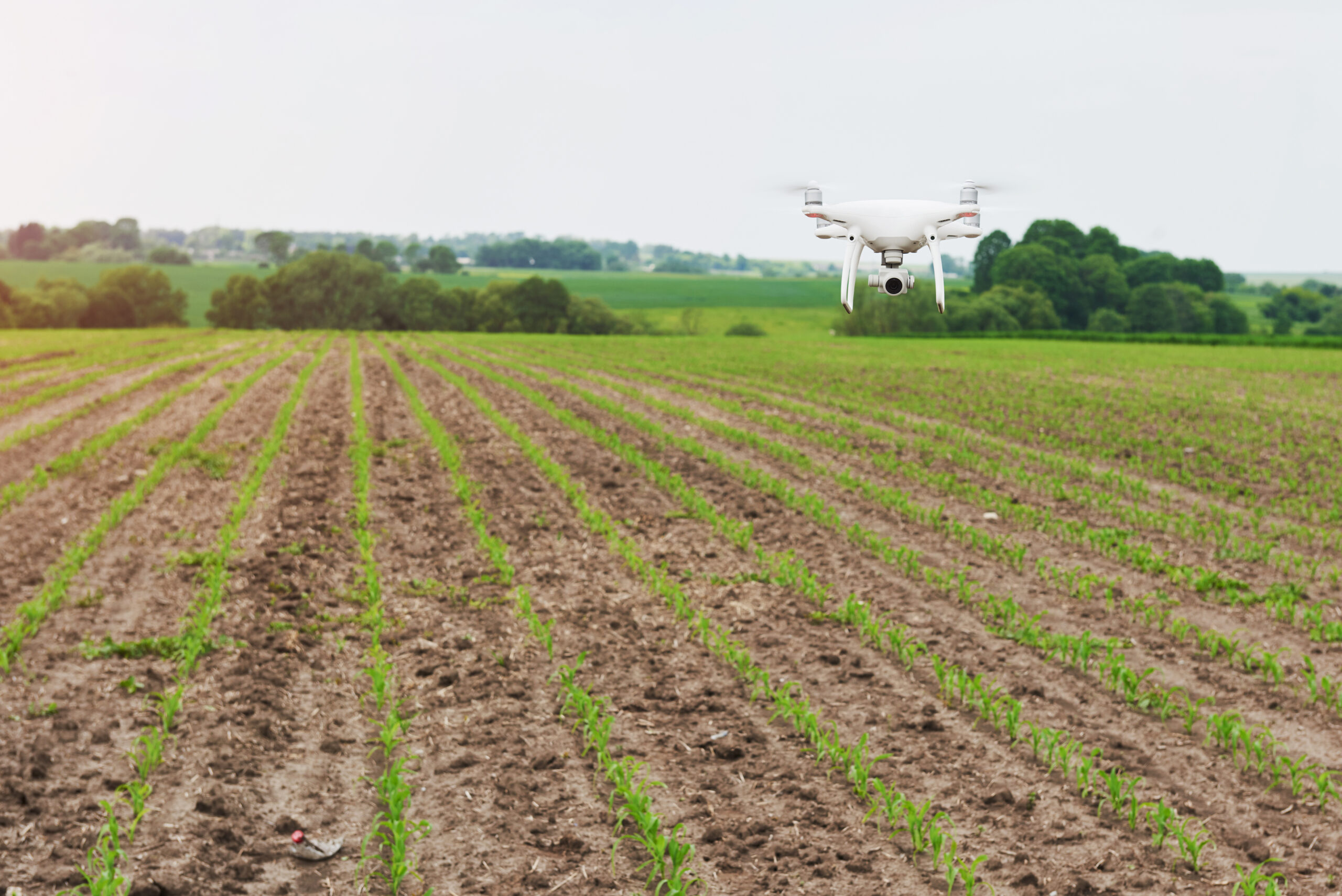
Indian agriculture has never lacked hard work. What it has often lacked is timely, precise information. For decades, farmers have relied on intuition, visual inspection, and delayed reports to make decisions that directly impact yields and income. Today, that gap is being closed by crop monitoring drones, a technology that is quietly reshaping how Indian farms operate, from field mapping to precision spraying.
If you’re wondering whether this is just another agri-tech trend or a real shift, the answer is simple: crop monitoring drones are no longer optional for competitive farming in India. They are becoming a practical, data-driven tool that helps farmers grow more with fewer inputs, less risk, and better control.
What Are Crop Monitoring Drones and How Do They Work?
Crop monitoring drones are unmanned aerial vehicles equipped with high-resolution RGB cameras, multispectral sensors, and sometimes thermal imaging systems. These drones fly over fields and collect real-time data that the human eye simply cannot detect from the ground.
Unlike traditional crop scouting, which is slow and subjective, crop monitoring drones provide objective, field-wide insights. They can identify early signs of pest infestation, nutrient deficiency, water stress, and uneven crop growth, often days or weeks before visible symptoms appear.
This data is converted into actionable maps, such as NDVI and vegetation index reports, helping farmers make informed decisions quickly. In a country like India, where timing often determines success or failure, this speed matters.
Why Are Crop Monitoring Drones Critical for Indian Agriculture?
Indian agriculture operates under unique constraints – small landholdings, rising input costs, labor shortages, and increasing climate variability. In this context, crop monitoring drones offer clarity where uncertainty once ruled.
For example, instead of spraying an entire field “just in case,” farmers can now pinpoint exactly where intervention is needed. This targeted approach reduces unnecessary chemical use, lowers costs, and protects soil health.
According to a NITI Aayog assessment, precision agriculture tools, including agricultural drones in India, help farmers reduce input costs while improving overall crop productivity when used effectively. These numbers are not theoretical; they are already visible in progressive farming clusters across Maharashtra, Punjab, and Telangana.
How Do Agricultural Drones in India Improve Field Mapping Accuracy?
One of the most powerful applications of agricultural drones in India is field mapping. Crop monitoring drones generate high-resolution maps that reveal variability within the same plot – areas that are thriving and areas that are struggling.
This matters because fields are never uniform. Soil composition, moisture levels, and nutrient availability change across even a few acres. With drone-generated maps, farmers no longer guess; they see.
Accurate field mapping allows better planning for irrigation schedules, fertilizer application, and crop rotation strategies. Over time, this data builds a historical record that helps farmers anticipate problems before they escalate.
What Is Precision Spraying and Why Does It Matter?
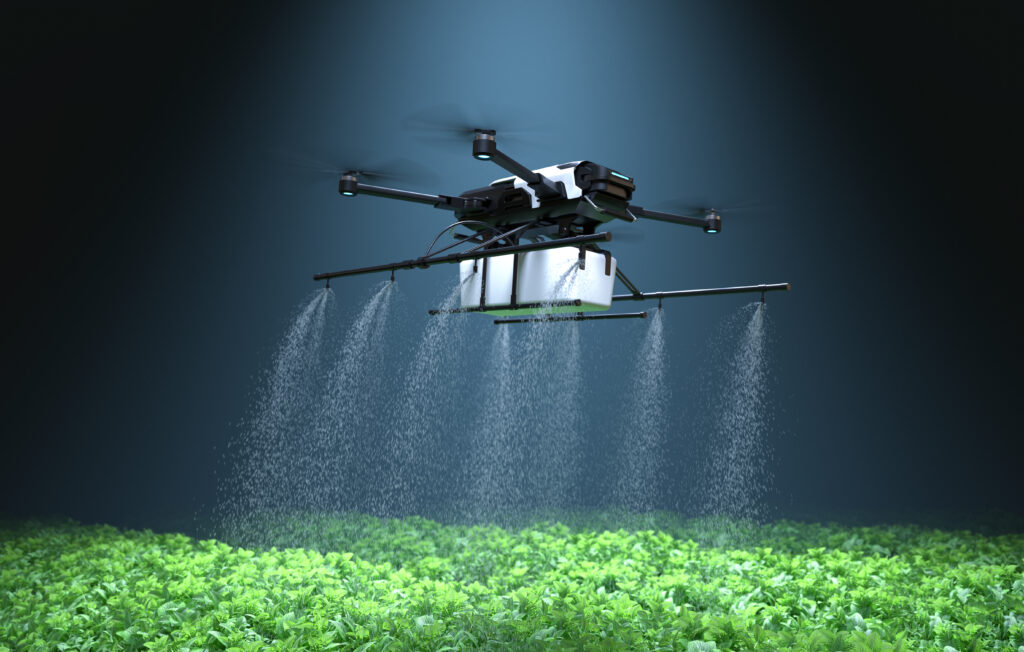
Precision spraying refers to the targeted application of pesticides, herbicides, or nutrients only where they are needed. Instead of blanket spraying, drones deliver inputs with pinpoint accuracy, minimizing waste and environmental impact.
In traditional farming, spraying is often one of the most expensive and risky operations. Manual spraying exposes workers to chemicals and frequently results in overuse. Precision spraying using drones changes this equation entirely.
One study indicates that drone-based precision spraying can reduce chemical usage by up to 30%, while ensuring better coverage and consistency compared to manual methods.
How Do Crop Monitoring Drones Enable Precision Spraying?
Crop monitoring drones enable precision spraying by bringing clarity and control to every stage of crop protection. The process begins with a complete field scan. Crop monitoring drones fly over the farm and capture detailed images and sensor data, offering a full view of crop health that is not possible through manual inspection alone.
Next, the collected data is analyzed to identify specific problem areas. These zones may show early signs of pest infestation, disease development, nutrient deficiency, or water stress. Because these issues are detected early, farmers can respond before damage spreads across the field.
Once the problem zones are identified, the information is used to design a targeted spraying plan. This plan clearly defines where spraying is required and where it is unnecessary.
Finally, drones carry out precision spraying only in the identified areas. Inputs are applied accurately and efficiently, turning spraying from a reactive activity into a planned, data driven operation that improves results while reducing waste.
What Are the Economic Benefits of Agricultural Drones in India?
The financial case for crop monitoring drones is becoming increasingly clear. While many farmers initially worry about costs, the return on investment often comes faster than expected.
By reducing chemical use, lowering labor dependency, and preventing yield losses, drones directly improve farm profitability. A World Bank-backed pilot study in India showed that farmers using drone-assisted crop monitoring and precision spraying recovered their investment within 1–2 cropping seasons.
Field pilots and agri-tech programs supported by institutions such as the World Bank indicate that drone-assisted crop monitoring and precision spraying can help farmers recover costs faster by reducing input waste and preventing yield losses.
Beyond direct savings, drones also reduce crop losses caused by delayed intervention, a silent drain on farm income that rarely gets accounted for.
How Safe and Reliable Are Crop Monitoring Drones for Farms?
Safety is a critical concern in agriculture, particularly during spraying operations where prolonged exposure to chemicals can pose serious health risks. Crop monitoring drones address this challenge by minimizing the need for manual spraying, thereby significantly reducing direct human contact with pesticides and fertilizers. Farmers and field workers no longer have to enter treated areas, which improves on-field safety and lowers long-term health risks.
From a reliability perspective, modern agricultural drones in India are designed with advanced safety mechanisms, including flight stability systems, obstacle avoidance, automated return-to-home functions, and built-in redundancies. When operated by trained pilots and in compliance with regulatory guidelines, these drones deliver consistent performance and are widely considered safer, more controlled, and more dependable than traditional spraying methods.
What Is the Role of Government Policy in Agricultural Drones India?
Government policy has played a decisive role in accelerating the adoption of agricultural drones in India. Through initiatives like the Sub-Mission on Agricultural Mechanization, several states now support drone usage via service-based subsidies rather than direct ownership. This approach makes crop monitoring drones accessible even to small and marginal farmers, who can benefit from advanced technology without heavy upfront investment.
In parallel, the Directorate General of Civil Aviation (DGCA) has simplified drone regulations, reducing compliance complexity and lowering barriers for agri-entrepreneurs, startups, and Farmer Producer Organizations (FPOs). These reforms have encouraged the rapid expansion of drone-as-a-service models across rural regions. Collectively, these policy measures send a strong and unambiguous signal: agricultural drones in India are no longer experimental tools, but emerging strategic infrastructure for modern, data-driven farming systems.
What Challenges Do Farmers Face When Adopting Crop Monitoring Drones?
Despite the benefits, farmers face several practical challenges when adopting crop monitoring drones, especially during the early stages of use:
- Limited awareness: Many farmers are still unfamiliar with how crop monitoring drones work and what specific problems they can solve on the farm.
- Data interpretation challenges: Drone-generated maps and insights can feel complex, making it difficult for farmers to translate data into clear, actionable decisions.
- Learning curve: Using drone-based insights requires basic digital skills and training, which are not yet evenly available across rural regions.
- Cost perception: High upfront costs discourage ownership, particularly for small and marginal farmers.
- Operational dependency: Availability of trained drone pilots and service providers can be inconsistent in some areas.
To overcome these barriers, service-based models, where farmers pay per acre instead of owning drones, are gaining popularity. As training improves and success stories spread, adoption is becoming steadily easier.
How Will Crop Monitoring Drones Shape the Future of Indian Agriculture?
The future of Indian agriculture is shifting toward data-led decision-making, moving away from guesswork and delayed reactions. Crop monitoring drones will play a central role in this transformation by integrating with artificial intelligence, real-time weather data, and soil analytics. Instead of only identifying existing problems, these systems will increasingly offer predictive insights, helping farmers anticipate stress, pest outbreaks, or nutrient deficiencies before visible damage occurs. Imagine knowing which section of a field is likely to face moisture stress next week and acting in advance rather than responding after losses begin. This proactive approach will improve yields, reduce input waste, and strengthen resilience against climate variability. The technology required for this future already exists, and its wider adoption is closer than many farmers expect.
At Invade Agro Global, we are committed to enabling this transformation by bringing reliable solutions that help Indian farmers make smarter decisions and farm with confidence.