
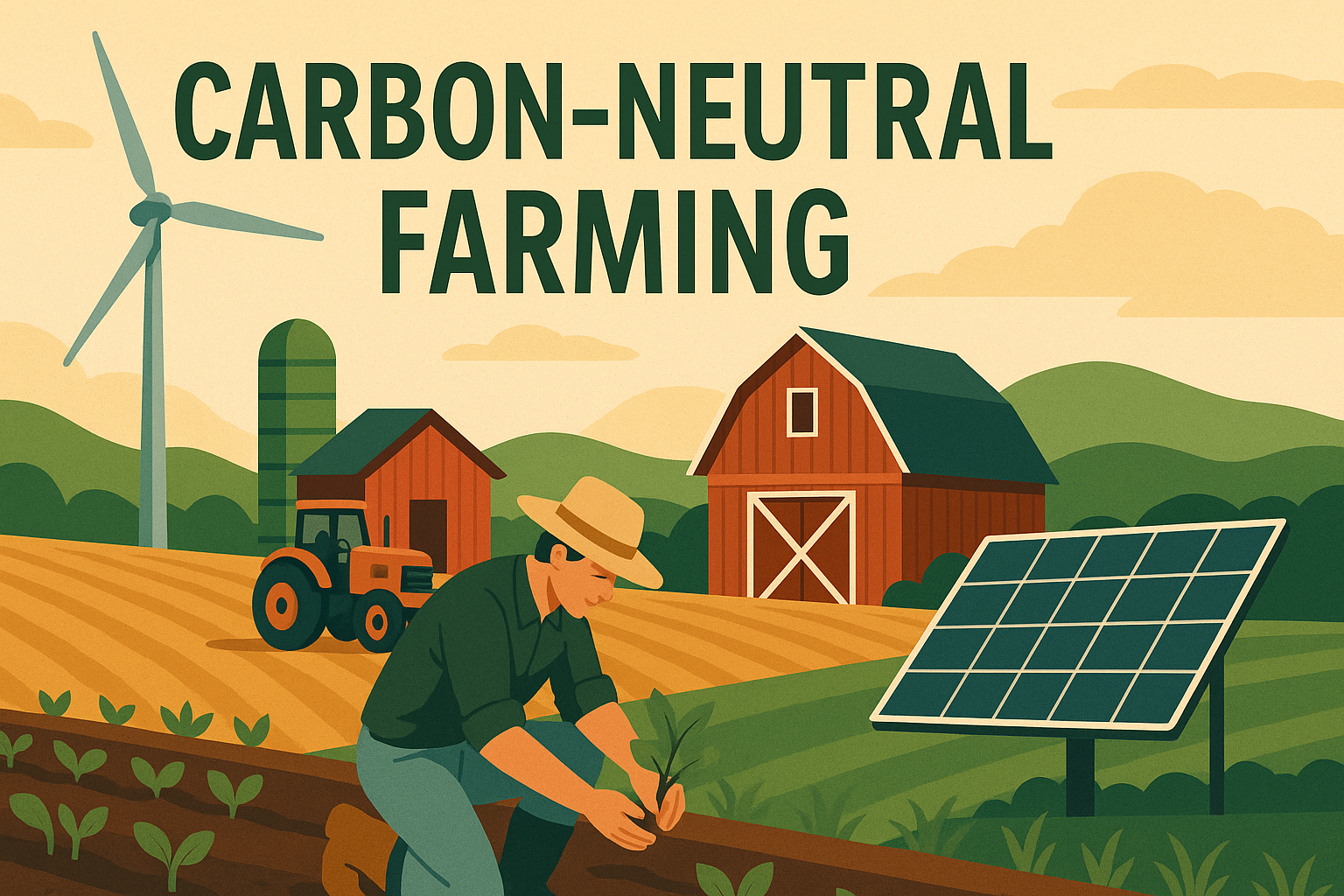
Carbon-Neutral Farming Is Transforming Agriculture into a Sustainable Future
Have you ever wondered what the farms of the future will look like? Not just fields of green stretching endlessly, but living ecosystems that clean the air, enrich the soil, and nourish communities, all at once. This isn’t a dream. It’s happening now through carbon-neutral farming, a movement that’s quietly reshaping agriculture into a powerful tool against climate change.
At Invade Agro, we believe that true progress in agriculture begins where innovation meets sustainability. And carbon-neutral farming embodies that belief perfectly, it’s smart, scientific, and deeply human.
What Does Carbon-Neutral Farming Really Mean?
Carbon-neutral farming means producing food in a way that balances carbon emissions with carbon absorption. In traditional farming, tractors, fertilizers, and land clearing release large amounts of carbon dioxide and methane into the atmosphere. But in carbon-neutral systems, these emissions are reduced, offset, or captured back into the soil and vegetation.
According to the World Resources Institute, agriculture stands as the second-largest source of global greenhouse gas emissions, contributing around 11.7% of total emissions, just after the energy sector. The main culprits are livestock farming and agricultural soils, which release significant amounts of methane from manure and nitrous oxide from fertilizers. Additionally, emissions arise from land-use changes like deforestation and energy consumption in farm operations. Yet, what makes agriculture truly unique is its dual potential, while it contributes to climate change, it also holds the power to reverse it through regenerative and carbon-neutral practices. That’s where the real transformation begins.
This isn’t just about planting more trees or cutting fertilizer use; it’s about rethinking the entire ecosystem. From crop selection and soil care to renewable energy and waste recycling, every step in carbon-neutral farming is designed to heal rather than harm.
And one of the biggest contributors to that healing process is agroforestry.
How Does Agroforestry Support Carbon-Neutral Farming?
Imagine walking through a farm where trees, crops, and animals coexist naturally. That’s agroforestry in action. It’s the practice of integrating trees and shrubs into agricultural systems, creating miniature forests that nurture both the land and the farmer’s income.
Every tree in an agroforestry system plays a role in fighting climate change. Its roots store carbon deep in the soil, its canopy shades the ground and reduces water loss, and its leaf litter enriches soil organic matter. Research shows that well-managed agroforestry can sequester 1.5–3.5 tonnes of carbon per hectare per year, depending on the tree density and crop type.
But the benefits go far beyond carbon capture. Trees provide timber, fruit, and fodder; they stabilize slopes, prevent erosion, and attract pollinators. For farmers, that means diversified income and healthier land – a win-win scenario.
Why Is Carbon-Neutral Farming the Future of Global Agriculture?
Climate change is no longer a distant threat; it’s at our doorstep. Rising temperatures, shifting rainfall, and soil degradation are already cutting yields in parts of India, Africa, and Europe. As per the study by World Resources Institute, to feed a projected 10 billion people by 2050, the world must grow 56% more food, without doubling emissions.
That’s where carbon-neutral farming steps in. By reducing chemical inputs, optimising water use, and increasing soil carbon, farmers can grow more with less.
It’s also becoming a policy priority. Nations like India, Kenya, and the UK are actively supporting low-carbon agricultural practices under the Paris Climate Agreement. Businesses and investors are equally keen to fund green supply chains, creating a wave of opportunity for climate-smart farmers.
In short, sustainability is no longer optional; it’s the new standard.
What Are the Core Practices That Make a Farm Carbon-Neutral?
Building a carbon-neutral farm doesn’t require an overnight transformation. It’s about adopting a series of mindful, measurable steps that collectively make a huge impact:
- Agroforestry and Silvopasture: Integrating trees with crops and livestock to maximize carbon storage and biodiversity.
- Renewable Energy Use: Replacing diesel pumps with solar irrigation systems and using biogas from organic waste.
- Soil Carbon Storage: Adding compost, cover crops, and biochar to enhance soil organic matter.
- Reduced Tillage: Limiting plowing to protect soil microbes and prevent carbon loss.
- Precision Agriculture: Using data-driven tools, drones, and IoT sensors to apply fertilizers and water only where needed.
Together, these practices transform traditional farming into a living system that not only feeds people but also stabilizes the climate.
Can Small and Medium Farmers Adopt Carbon-Neutral Farming?
Absolutely, and many already are. The strength of carbon-neutral farming lies in its adaptability. It doesn’t demand vast landholdings or heavy machinery; it begins with awareness, resourcefulness, and gradual change.
Small and medium farmers can start with simple, low-cost practices that have long-term impact. Planting trees along field boundaries (a form of agroforestry) helps absorb carbon while providing shade and wind protection. Replacing chemical fertilizers with organic compost improves soil structure and fertility. Capturing rainwater or reusing farm wastewater enhances water efficiency and resilience during dry seasons. Each of these steps may seem small, but together they build a powerful foundation for a climate-positive future.
Economic opportunity is another benefit. Through carbon credit programs such as Verra’s Verified Carbon Standard and Gold Standard, farmers can earn additional income for every tonne of carbon their land sequesters. These certified credits are purchased by organizations working toward net-zero goals, turning sustainable practices into tangible rewards.
Across countries, smallholder farmers are already proving that sustainability and profitability can go hand in hand. By adopting carbon-neutral farming methods, they’re not just protecting the environment, they’re building more resilient, self-sustaining livelihoods for generations to come.
How Does Carbon-Neutral Farming Improve Soil and Water Health?
Healthy soil is the beating heart of carbon-neutral farming. When rich in organic matter, it not only stores more carbon but also holds more water, reducing drought risks and irrigation costs.
The addition of trees through agroforestry systems enhances this effect. Their roots prevent erosion, their shade reduces evaporation, and their decomposed leaves restore nutrients. Farms with mixed tree-crop systems retain more soil moisture during dry seasons compared to monoculture farms.
When soil thrives, everything else follows – crops grow better, yields become stable, and ecosystems regain their natural balance.
What Role Does Technology Play in Carbon-Neutral Farming?
Technology is no longer a luxury in agriculture; it’s the foundation for precision and progress. Today’s carbon-neutral farming combines ancient wisdom with cutting-edge innovation.
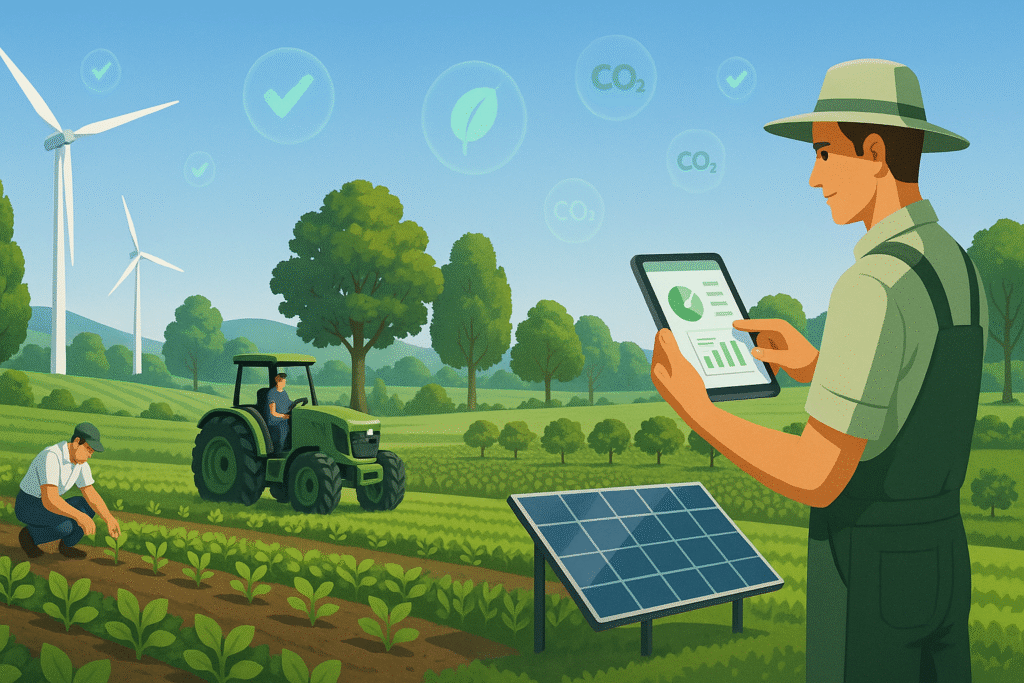
Tools like drone mapping, AI-driven soil analytics, and IoT sensors allow farmers to track soil carbon, monitor moisture, and calculate emissions in real-time. Data helps them make smarter decisions, from when to irrigate to how much fertilizer to apply.
At Invade Agro, we harness these technologies to empower farmers with knowledge. Through digital dashboards, we help them visualize their carbon balance, track agroforestry growth, and optimize crop performance sustainably. The result is smarter farming, lower emissions, and better yields, all working in sync.
How Can Businesses and Governments Accelerate Adoption?
Scaling carbon-neutral farming requires collective effort. Governments can play a huge role by offering subsidies for renewable energy, training programs, and carbon-trading infrastructure. The private sector, too, can drive adoption by integrating sustainable sourcing and rewarding farmers who reduce emissions.
International initiatives like the UN’s Climate-Smart Agriculture Program and FAO’s Green Climate Fund projects are already providing financial and technical support worldwide. Meanwhile, companies like Invade Agro partner directly with local communities to deliver training, soil testing, and carbon-tracking solutions that bridge the gap between global goals and local action.
When businesses, policymakers, and farmers work together, sustainability scales, and the planet benefits.
What Are the Long-Term Benefits of Carbon-Neutral Farming?
The impact of carbon-neutral farming goes far beyond reducing emissions. It creates a ripple effect across society, the economy, and the environment.
- For the planet: Reduced greenhouse gases, restored ecosystems, and improved biodiversity.
- For farmers: Lower input costs, better yields, and potential earnings from carbon credits.
- For communities: Stable food supplies, healthier soil, and clean water resources.
Farms adopting regenerative and carbon-focused practices can significantly boost productivity while reducing emissions – a clear sign that sustainability and growth can go hand in hand.
How Can You Be Part of This Change?
Whether you’re a farmer, policymaker, business owner, or consumer, your choices matter. Supporting brands and organizations that prioritize carbon-neutral farming helps drive systemic change. Even simple actions, like buying sustainably produced food or planting native trees, contribute to the larger climate mission.
At Invade Agro, we invite everyone to be part of this journey. Through collaborative innovation, technology, and education, we’re turning farmlands into carbon sinks and farmers into climate champions.