
Resilience of Indian Farm Exports Despite Global Headwinds
Over the last decade, the global agricultural landscape has been shaped by extreme volatility. From the US–China tariff war to the pandemic, rising freight costs, supply-chain disruptions, and climate-driven production shocks, countries across the world witnessed one of the most turbulent trading periods in recent memory. Yet, amid this uncertainty, Indian agricultural export numbers have consistently defied expectations.
The resilience of Indian farm exports is not accidental, nor is it a temporary spike created by global shortages. It is a deeper structural trend driven by competitiveness, adaptability, policy support, and the sheer diversity and discipline of India’s agricultural ecosystem.
How Indian Agricultural Exports Withstands Global Turbulence?
One of the strongest foundations of Indian agricultural export success is price and supply competitiveness. Even in years when inflation pushed production costs up globally, India maintained an edge.
This competitive strength comes from several factors: wide agro-climatic diversity that allows multi-season cropping; a maturing warehousing and cold-storage network; and the rising professionalism of the agricultural value chain through FPOs, modern processors, and export-focused clusters. Even when freight rates surged, particularly during the pandemic, India’s vast supply base ensured that exporting agriculture products remained viable and attractive to international buyers.
Item | 2024–25 | Apr–Sep 2024 | Apr–Sep 2024–25 | % Growth |
Marine Products | 7405.00 | 3385.82 | 3974.94 | 17.40 |
Non-Basmati Rice | 6527.98 | 2251.30 | 2871.05 | 27.53 |
Basmati Rice | 5944.49 | 2869.88 | 2763.46 | -3.71 |
Spices | 4451.97 | 2091.02 | 2146.89 | 2.67 |
Buffalo Meat | 4060.54 | 1806.15 | 2187.08 | 21.09 |
Coffee | 1805.57 | 932.47 | 1048.75 | 12.47 |
Fruits & Vegetables | 2068.93 | 848.80 | 948.90 | 11.79 |
Tobacco | 1979.01 | 986.12 | 993.96 | 0.80 |
Processed F&V | 1805.83 | 852.82 | 918.40 | 7.69 |
Oilmeals | 1346.80 | 698.66 | 585.39 | -16.21 |
Oilseeds | 1343.98 | 628.00 | 632.20 | 0.67 |
Castor Oil | 1152.37 | 622.09 | 612.29 | -1.58 |
India’s cost of cultivation is also relatively lower compared to many exporting nations. This has helped Indian rice, sugar, spices, and fruits remain globally competitive even when world demand softened.
What Are the Policies That Cushion External Shocks?
A significant pillar behind the resilience of Indian agricultural export is a consistent improvement in policy frameworks. Over the past few years, agricultural trade has been backed by stronger infrastructure, digitised processes, and targeted export incentives.
Policies such as the Agri Export Policy, reforms in port handling, improved testing and certification systems, and market-linkage initiatives by APEDA and MPEDA have aligned India more closely with global demand. These reforms did not eliminate risks but gave exporters the confidence to continue shipping even during disruptive events.
Government-led efforts to diversify markets, reduce paperwork, and integrate traceability tools have ensured that Indian exporters can meet evolving global compliance standards more smoothly than before. This gave India a competitive edge when many countries tightened their import rules following food-safety concerns post-pandemic.
Why Global Buyers Continue to Rely on India?
A major reason behind the resilience of Indian agricultural export is the world’s dependence on key Indian staples. Rice is perhaps the strongest example. India has remained the world’s largest rice exporter, accounting for more than 40% of global trade. Even when several countries faced production shortages, due to floods, droughts, or supply restrictions, India’s export ecosystem remained strong enough to fill the global gap.
India’s presence is equally dominant in spices, marine products, sugar, tea, and buffalo meat. In each of these categories, India has created deep, long-standing relationships with specific markets. These ties, built over decades, do not break easily even when the world economy weakens.
What global buyers value most is reliability, and India has demonstrated time and again that it can deliver, through floods, recessions, pandemics, or geopolitical tensions.
How India Navigates Global Headwinds?
India’s response to unpredictable global conditions has not been defensive; it has been strategic. The Indian agricultural export ecosystem has evolved in three significant ways.
First, exporters have expanded beyond traditional buyers. When price pressure grew in established markets like the EU, demand rose sharply from the Middle East, Africa, and East Asia. This geographic spread has reduced vulnerability.
Second, the shift towards value-added products has increased stability. Categories such as ready-to-cook mixes, premium rice variants, minimally processed spices, and specialty foods now represent a growing share of export baskets. These products enjoy healthier margins and are less dependent on commodity cycles.
Third, sustainability and traceability have moved from being optional to standard practice. Exporters increasingly adopt QR-based traceability, pesticide-residue management programs, and certifications that address concerns of environmentally conscious markets. These investments are helping India stay competitive even as buying nations tighten their rules.
To summarise the key strategic shifts:
- Diversification of export destinations
- Increased value-addition
- Stronger sustainability and compliance mechanisms
These shifts ensure that Indian agricultural export remains resilient even when global supply chains are uncertain.
A Stable Supplier in an Unstable World
In a period when food insecurity has become a global concern, India’s role as a stable supplier has grown significantly. Many regions, Sub-Saharan Africa, the Middle East, and parts of South Asia, depend heavily on Indian rice, sugar, or pulses. During production shocks in these regions, India has often acted as a buffer.
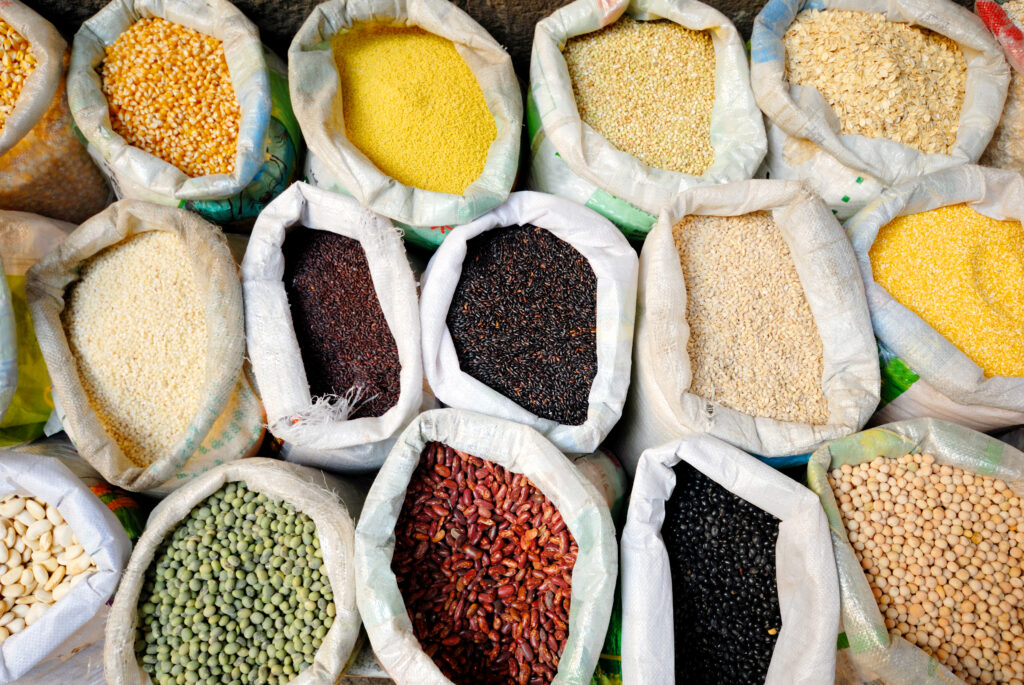
When rice-producing nations imposed export bans or experienced droughts, Indian shipments provided relief. When global spice markets struggled with inconsistent harvests, India stepped in with stable supply levels. Even during the pandemic, when several countries experienced paralysed supply chains, Indian ports remained largely operational, ensuring the continuity of agricultural shipments.
This reliability is one of the biggest strengths of Indian agricultural export and a key reason India continues to gain market share even during global downturns.
What Is the Role of Farmers?
The resilience of Indian exports ultimately comes down to the people who grow the food, the farmers. Their ability to adjust quickly to market shifts has played a crucial role.
Farmers have been increasingly responsive to signals related to export demand, changing sowing decisions based on price trends or global shortages. For instance, acreage under export-oriented rice varieties often expands when international prices strengthen. Similarly, growers of spices like cumin and coriander adjust production based on global demand curves.
Technology adoption at the farm level has also accelerated the performance of Indian agricultural export. Weather-based advisory apps, micro-irrigation, drone spraying, soil diagnostics, and precision inputs have helped farmers improve yields and consistency. These improvements directly translate into export-ready crops that meet the stringent standards of international markets.
Additionally, tighter linkages between farmers, processors, and exporters, through FPOs and contract-farming arrangements, have helped streamline quality control and reduce volatility.
What Are the Challenges?
While the story is largely positive, the future of Indian agricultural export still faces notable challenges. Climate volatility, fluctuating global commodity prices, stricter residue-compliance norms, and logistical bottlenecks at certain ports create friction in the system.
Cold-chain expansion, better warehousing, reduced post-harvest losses, and harmonised pesticide standards are areas that still require attention. Competition from countries like Vietnam, Thailand, and Brazil is also intensifying.
However, what stands out is that even in the face of these constraints, India’s export momentum has not declined. Instead, the ecosystem has shown adaptability, shifting to new markets, upgrading compliance processes, and improving value-addition capacity.
Where India Is Heading
The next decade of Indian agricultural export growth will likely be shaped by:
- Technology-led productivity improvements
- Better supply-chain integration
- Expansion of climate-resilient crops
- Stronger global branding of Indian produce
Growth in high-value categories such as plant proteins, organic products, premium spices, and functional foods
India’s strong domestic market also plays a role. A vibrant internal market helps exporters manage price risks better, while also giving processors the confidence to invest in world-class facilities.
If these trends strengthen, India’s position as one of the world’s most reliable agricultural suppliers will only grow deeper.
India’s Steady Hand in a Volatile Global Market
The resilience of Indian agricultural export is a story of disciplined farmers, adaptable exporters, and supportive policy frameworks working together. Even when global markets weakened under the weight of tariffs, shipping disruptions, and climate unpredictability, India’s agricultural exports continued not just to survive, but often to outperform.
In a future where food security will dominate international conversations, India’s agricultural exports will play an increasingly critical role. They offer not only stability to global markets but also a roadmap of how diversity, competitiveness, and adaptability can overcome even the harshest global headwinds.