Understanding Commodity Price Volatility and What It Means for Farmers and Consumers
If you have ever wondered about the reason for a considerable rise in the price of onions, or why a bag of rice seems more expensive this year than last year’s cost, commodity price volatility is generally the answer.
It sounds like a technical word, but its impact is deeply human, dictating a farmer’s income, a household’s expenses at the store, and market stability overall. With significant challenges from the realities of a changing weather pattern, wars impacting trade, and sudden increases in demand, commodity price volatility is everyone’s silent fear from farm to fork.
Let’s define what commodity price volatility is, why it happens, and its impact on the livelihoods of farmers and consumers alike.
What Is Commodity Price Volatility and Why Does It Matter?
Commodity price volatility simply means the perpetual rise and fall of prices of staple items such as wheat, rice, coffee, sugar, oil, or fertilizers. The ups and downs may happen on a weekly, monthly, or yearly basis, depending on global demand, local production, and even the weather.
When prices are stable, farmers can plan more easily and consumers buy more confidently. But when prices swing back and forth like a pendulum, it is impossible for either side to make plans. A farmer doesn’t know what he will get for his crop, and a consumer doesn’t know how much more the grocery bill next month will be.
According to the calculations of the World Bank, the global agricultural prices took a dip of nearly 7% by the middle of the year 2025. The incident is an illustration of how fast the markets can change. What goes down tomorrow can be up again today, and this makes price volatility of commodities a perennial headache for the whole supply chain.
As we say, “You can’t control the wind, but you can adjust your sails.” Price volatility is the first step to master if you want to learn how to sail through volatile markets.
How Do We Define and Measure Commodity Price Volatility?
There are a few methods that economists employ in commodity price volatility measurements. One of the simpler methods is measuring how far the prices deviate from their average value over time. This has often been measured with indices such as the FAO Food Price Index or the IMF Commodity Price Index.
For instance, when the price of maize suddenly shifts from ₹18 per kilo to ₹25 and then falls to ₹16 in a matter of months, that’s a clear indicator of volatility. Futures markets also provide hints about impending price fluctuations. These are agreements that allow the traders to fix prices beforehand; they help forecast how uncertain the future is going to be.
The more random the movement, the greater the volatility, and the greater the risk for all parties concerned.
What Triggers Commodity Price Volatility?
There isn’t a single one. Volatility in commodity prices is like a storm; it results from multiple winds blowing at the same time.
Climate and Weather Changes
Agriculture is weather-dependent. A surprise drought, flood, or delayed monsoon can tighten yields, cut supply, and push prices to the skies. The FAO says that volatile weather is currently the largest source of food price volatility in the world.
Consider the case of El Niño, a climate phenomenon that heats up ocean temperatures and usually brings droughts to Asia and Africa. Every time it shows up, farmers get lower yields, and consumers get higher prices.
Supply Chain Disruptions
Even if the crops are good, it may not be easy to transport them from the farm to the marketplace. A transportation strike, fuel shortage, port congestion, or geopolitical crisis can choke supply lines. The Russian-Ukrainian conflict, for instance, drove global wheat and fertilizer prices to record levels in 2022-23, a classic case of commodity price fluctuation based on logistics and politics, and not agriculture.
Energy Prices
Agriculture is driven by energy, from irrigating with water to producing fertilizer. When oil prices rise, so does the cost of growing and shipping food. Agriculture and energy are joined at the hip; each’s volatility is self-fulfilling.
Trade Policies
At other times, governments step in and impose export restrictions or adjust import tariffs to defend home markets. As benevolent as the motive, the policy tends to create ripple effects elsewhere and add commodity price instability to global markets.
Market Speculation
Financial speculators tend to trade and re-trade agricultural futures as investments. This provides liquidity but also tends to amplify short-term price fluctuations when speculation exceeds actual demand.
When all these forces converge, what occurs is the random dance of commodity price volatility that all consumers and producers go through.
How Does Commodity Price Volatility Impact Farmers?
Volatility for farmers isn’t a figure on a graph; it’s a real roller coaster that determines income, debt, and hope.
Income Uncertainty
Farmers have no idea what price they’ll receive at harvest time. When prices crash immediately after planting, their profits can’t even pay for production. For small farmers, a single bad year can put them into debt.
Limited Access to Credit
Banks and lenders see volatile prices as risky. When they cannot forecast the amount of money a farmer will make, they do not want to give loans or financing for machinery. This restrains farmers from investing in improved seeds, irrigation, or technology.
Reduced Investment and Innovation
High commodity price volatility discourages long-term planning. Why invest in new tools when next year’s prices are uncertain? This slows modernization and keeps productivity stagnant.
Controlling the Risk
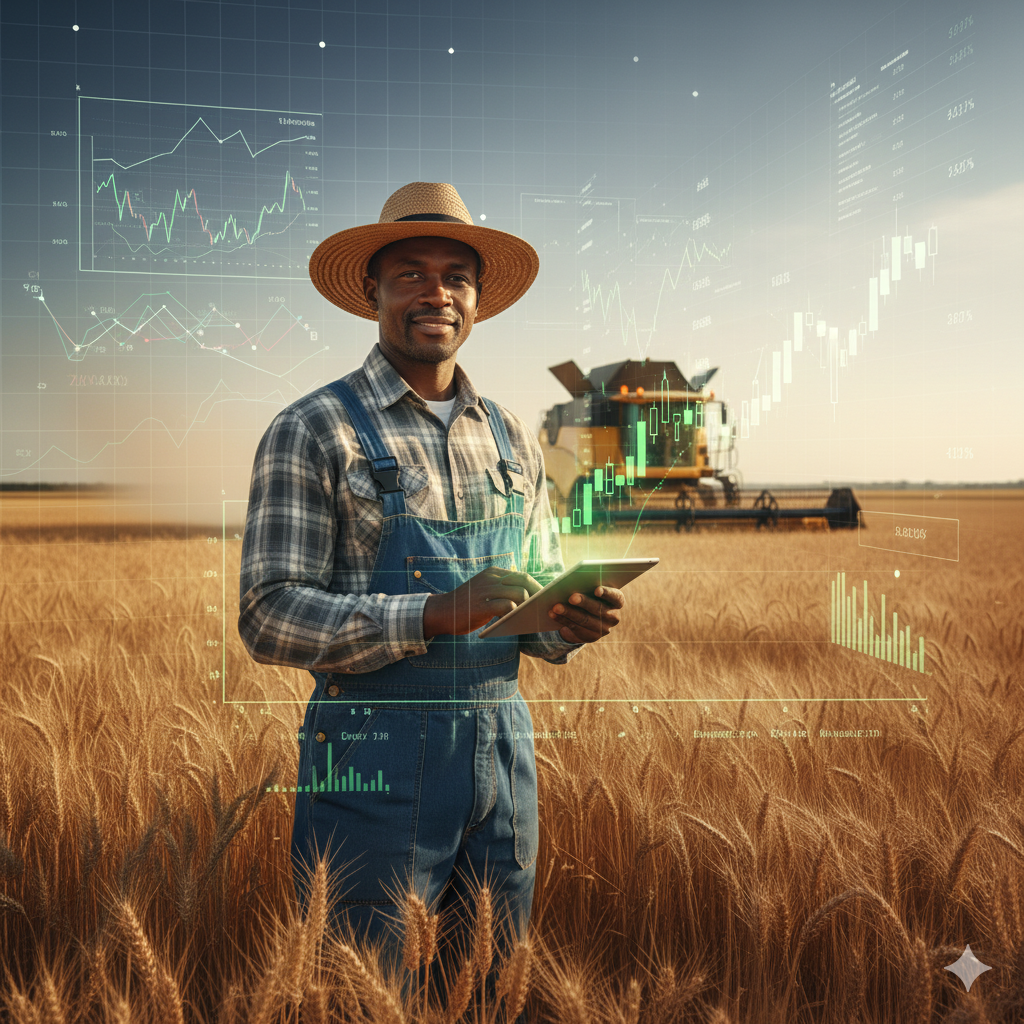
The good news is that risk management tools exist for these risks. Crop diversification does the trick – as goes the old saying, “Don’t put all your eggs in one basket.” Futures contracts, crop insurance, and warehouse receipts also enable farmers to fix prices or protect against losses.
At Invade Agro Global, we’ve seen firsthand how empowering farmers with training, technology, and transparent pricing systems can transform uncertainty into opportunity. Our local partnerships and market intelligence platforms across Asia and East Africa enable farmers to make better decisions, plan, and mitigate the shocks of commodity price volatility.
How Does Commodity Price Volatility Affect Consumers?
When volatility crashes down on the agricultural economy, the first group to feel the storm would be farmers, and the second in line to experience its effects would be the end-use customers.
Food Inflation
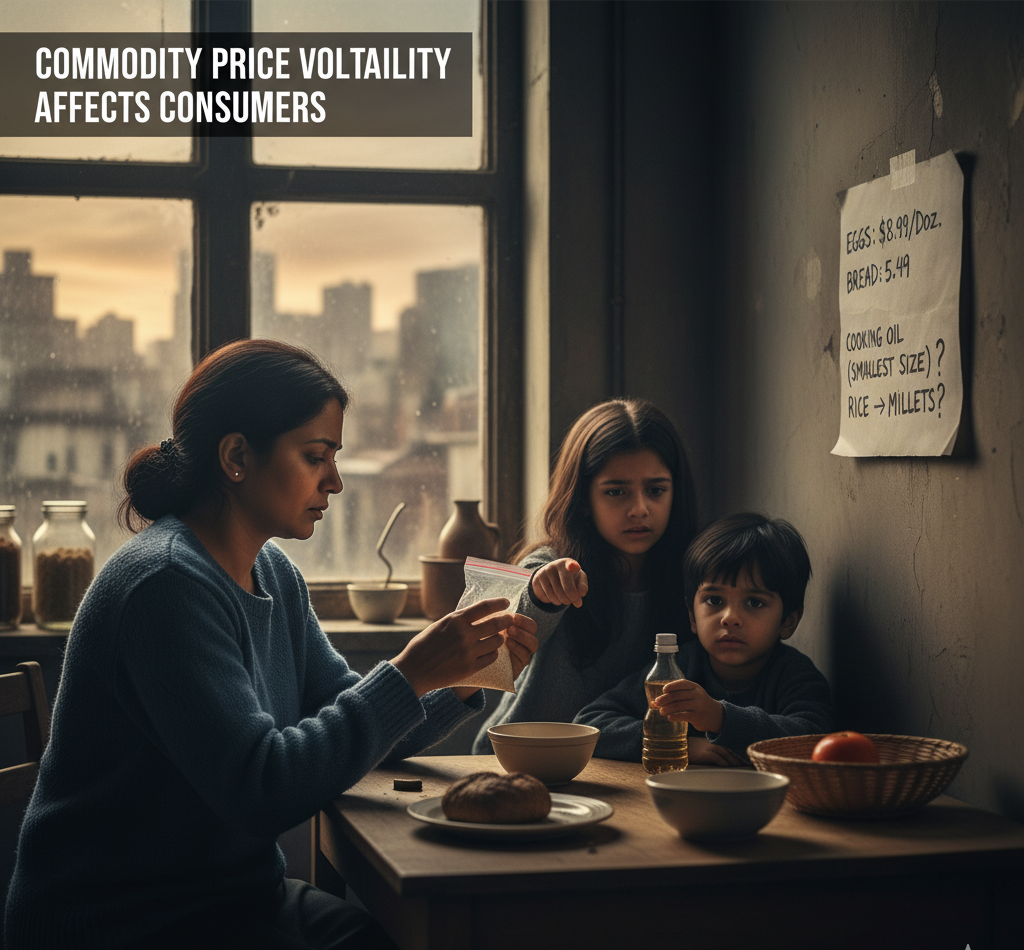
When prices increase at the farm level, the impacts find their way to the shop shelf eventually. Eggs, bread, cooking oil, and vegetables are expensive. The USDA observes that commodity price increases tend to result in higher retail food inflation in the months to come.
Changes in Consumption
Humans adjust. If rice is expensive, households will turn to millets; if the price of cooking oil goes up, they will purchase smaller packs. Volatility in the prices of commodities affects what one consumes and how frequently they purchase it.
Stress on Low-Income Families
The needy allocate a greater proportion of their expenditures to food. As prices increase rapidly, it tightens household budgets and can lower nutrition quality. According to the FAO, price volatility is one of the biggest threats to global food security because it hurts poor consumers the most.
How Can We Manage and Reduce Commodity Price Volatility?
There is no silver bullet to remove commodity price risk, but there are clever means to ease its sting.
Improved Market Mechanisms
Futures contracts, options, and crop insurance enable farmers and buyers to hedge prices ahead of time. This introduces certainty and softens the blow from unexpected shocks.
Encouraging Government Policies
Governments play a crucial role in providing buffer stocks, fixing minimum support prices, and creating transparent trading facilities.Stable policies create confidence and limit panic-like responses.
Technology and Data
Digital platforms are revolutionizing how markets function. Farmers receive real-time price quotes through mobile apps. AI-based models and satellite images can predict yield and anticipate shortages ahead of time. These technologies convert information into power, allowing everyone to react quickly to prospective volatility.
Partnerships and Cooperatives
When farmers consolidate under cooperatives or long-term agreements with firms, they possess greater bargaining power and more stable income. Collective risk is simpler to manage than personal uncertainty.
What’s Coming Down the Road Regarding Commodity Price Volatility?
The world will forever have some degree of commodity price volatility; that is the way markets work. But the future is contingent upon how we get ready.
Fostering resilience involves emphasizing sustainable agriculture, local value chains, and improved forecasting. It involves educating farmers to be entrepreneurial thinkers and consumers on how their food really exists.
As a wise saying goes, “You can’t stop the waves, but you can learn to surf.” Price volatility is never possible to eliminate, but with the right mix of knowledge, technology, and cooperation, we can learn to surf it instead of sinking into it. At Invade Agro Global, we think that resilience starts with empowering each farmer to surf those waves with confidence.